
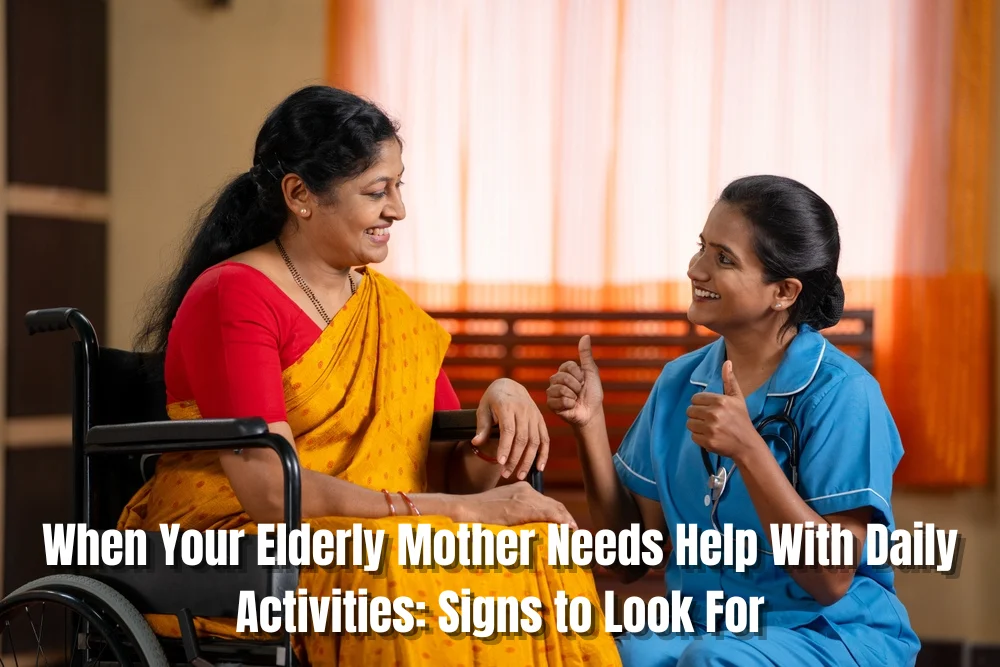
As mothers grow older, they often try to remain independent for as long as possible. Even when walking becomes difficult, bathing feels tiring, or household activities become challenging, many elderly women hesitate to ask their children for help. They may say, “I can manage,” because they do not want to become dependent on their family.
For children, this can make it difficult to understand when an elderly mother actually needs daily assistance. The signs are not always obvious. Sometimes they appear as small changes in hygiene, eating habits, mobility, memory, or mood.
This article explains the important signs families should watch for, what these changes may mean, and when a trained caretaker at home can help your mother continue living safely, comfortably, and with dignity.
Why Elderly Mothers May Not Ask for Help
Many elderly women have spent decades managing their homes and taking care of their families. Depending on someone else for basic activities can therefore be emotionally difficult.
Your mother may avoid asking for help because she:
- Wants to remain independent
- Does not want to trouble her children
- Feels embarrassed about needing personal care
- Is worried about having an unfamiliar person at home
- Does not realise how much her physical ability has changed
- Believes weakness and pain are simply part of ageing
Instead of waiting for her to ask, families should pay attention to changes in her everyday routine.
1. She Is Having Difficulty Getting Up From the Bed or Chair
Watch how your mother gets out of bed or stands up from a chair.
She may need assistance if she:
- Takes several attempts to stand
- Holds furniture for support
- Experiences pain while getting up
- Loses her balance
- Needs someone to pull her up
- Avoids getting up unless necessary
These changes may indicate reduced muscle strength, joint problems, pain, or balance difficulties.
A caretaker can provide support during transfers and daily movement while encouraging your mother to remain as independent as safely possible.
2. Walking Has Become Slow or Unsteady
Changes in walking are among the most important signs to notice.
Your mother may:
- Walk much more slowly
- Take unusually small steps
- Hold walls or furniture
- Avoid walking alone
- Struggle with stairs
- Become tired after walking short distances
- Feel afraid of falling
A fall in old age can lead to serious injuries, particularly for someone with weak bones or osteoporosis.
A trained caretaker can stay nearby during movement, assist with prescribed walking aids, and help reduce everyday fall risks.
3. Bathing Has Become Difficult
Bathing requires balance, strength, bending, reaching, and standing, which can become difficult with age.
You might notice that your mother:
- Bathes less frequently
- Avoids washing her hair
- Needs a long time in the bathroom
- Feels exhausted afterward
- Is afraid of slipping
- Has difficulty changing clothes afterward
Because bathing is personal, many elderly women may feel more comfortable receiving assistance from a female caretaker.
The caretaker can provide support while maintaining privacy and dignity.
4. She Is Struggling With Toileting
Bathroom difficulties are often something elderly parents do not discuss openly.
Look for signs such as:
- Difficulty reaching the toilet in time
- Trouble sitting down or standing up
- Frequent urine leakage
- Soiled clothing
- Difficulty maintaining hygiene
- Avoiding water to reduce bathroom visits
- Falls or near-falls in the bathroom
These situations require sensitive handling.
A female caretaker can assist with bathroom visits, changing, cleaning, and personal hygiene without making your mother feel embarrassed.
5. Her Personal Hygiene Has Changed
Changes in grooming can indicate that everyday activities have become physically difficult.
You may notice:
- The same clothes being worn repeatedly
- Uncombed hair
- Poor oral hygiene
- Body odour
- Difficulty changing clothes
- Reduced bathing
- Untrimmed nails
Rather than assuming she has stopped caring about her appearance, find out whether she is physically able to manage these activities.
6. She Is Skipping Meals or Eating Less
Check whether your mother is eating properly, particularly if she lives alone.
Warning signs include:
- Frequently skipping meals
- Losing weight
- Eating only biscuits, tea, or other easily available foods
- Food remaining untouched
- Difficulty holding utensils
- Difficulty chewing or swallowing
- Forgetting whether she has eaten
- Drinking very little water
A caretaker can help serve meals, provide feeding assistance when required, encourage hydration, and ensure that the diet recommended by the doctor or dietitian is followed.
Unexplained weight loss or swallowing difficulty should also be discussed with a healthcare professional.
7. Medicines Are Being Missed or Taken Incorrectly
Many seniors take several medicines for conditions such as diabetes, blood pressure, heart disease, thyroid problems, arthritis, or other illnesses.
Look for:
- Missed tablets
- Confusion about medicine timings
- Taking the same medicine twice
- Running out of medicines unexpectedly
- Difficulty reading medicine labels
Medication mistakes can be dangerous.
Families can use medicine organisers and schedules, while a caretaker can provide reminders and supervision according to the established care plan. Medical administration that requires professional skills should be handled by an appropriately qualified nurse.
8. Household Tasks Are Becoming Difficult
Look around the home when you visit.
Changes such as:
- Unwashed utensils
- Spoiled food in the refrigerator
- Clothes piling up
- Frequently misplaced belongings
- Difficulty preparing meals
- Forgotten appliances
- Increasing household clutter
may indicate that your mother is finding it difficult to manage independently.
The issue may be physical weakness, pain, poor eyesight, memory changes, or a combination of factors.
9. She Has Fallen or Nearly Fallen
Even one fall deserves attention.
More subtle warning signs include:
- Holding furniture while walking
- Frequent stumbling
- Difficulty getting up after sitting
- Fear of using the bathroom alone
- Avoiding stairs
- Refusing to walk outside because of fear
If your mother has already fallen, consider discussing the cause with her doctor. Vision, medicines, blood pressure, muscle weakness, balance problems, and the home environment may all contribute to falls.
10. She Is Spending Most of the Day in Bed or Sitting
Reduced activity can gradually create a cycle:
Weakness → less movement → further muscle loss → greater weakness.
If your mother has stopped moving around as much as before, find out why.
Pain, fear of falling, illness, depression, fatigue, or lack of assistance may be responsible.
Where medically appropriate, a caretaker can encourage safe daily movement and help her follow exercises recommended by her doctor or physiotherapist.
11. Forgetfulness Is Affecting Everyday Safety
Occasional forgetfulness can happen with age. However, families should pay attention when memory problems begin affecting safety.
Examples include:
- Leaving the gas stove on
- Forgetting to lock the door
- Taking medicines twice
- Getting confused outside the home
- Forgetting meals
- Leaving taps running
- Repeatedly losing important items
Increasing or unusual memory problems should be medically evaluated rather than automatically considered normal ageing.
12. She Has Become Quiet, Irritable, or Withdrawn
The need for help is not always physical.
Your mother may suddenly:
- Stop speaking as much
- Avoid visitors
- Lose interest in activities
- Become easily irritated
- Frequently say she feels lonely
- Stop going outside
- Seem unusually worried or fearful
Pain, loneliness, loss of independence, illness, medication effects, or changes in mental health can all contribute.
A caretaker can provide regular companionship, but persistent or significant behavioural changes should also be discussed with a healthcare professional.
13. Night-Time Has Become Difficult
Some elderly women manage relatively well during the day but struggle at night.
You may notice:
- Frequent bathroom visits
- Difficulty getting out of bed
- Confusion after waking
- Fear of walking in darkness
- Poor sleep
- Increased risk of falls
When night-time needs become frequent or unsafe, families may need to consider overnight or continuous supervision.
When Does Your Mother Need a Caretaker?
One small difficulty does not necessarily mean your mother requires full-time care.
However, professional assistance should be considered when:
- Several daily activities have become difficult
- She has experienced falls
- She cannot bathe or use the bathroom safely
- She frequently misses medicines
- She cannot prepare or eat meals properly
- Memory problems create safety risks
- She lives alone and requires supervision
- Family members cannot be present regularly
- Her daily needs are becoming too demanding for one family member
The level of care can then be matched to her actual needs.
Why a Female Caretaker May Make Her More Comfortable
For an elderly mother who needs help with personal activities, a female caretaker may provide additional comfort and privacy.
She can assist with:
- Bathing
- Dressing
- Toileting
- Diaper changes
- Grooming
- Feeding
- Walking
- Getting in and out of bed
- Companionship
- Daily routines
The objective should always be to help where necessary while allowing your mother to do whatever she can safely manage herself.
Caretaker or Nurse: What Does Your Mother Need?
The distinction is important.
A caretaker is generally suitable when your mother needs help with daily living, mobility, hygiene, feeding, supervision, or companionship.
A nurse may be necessary when she requires skilled medical care such as wound dressing, injections, catheter management, feeding tube care, certain vital monitoring, or other procedures prescribed by her doctor.
Depending on her condition, both types of support may sometimes be required.
How Lokseva Home Healthcare Can Support Your Mother
At Lokseva Home Healthcare, we understand that accepting help can be difficult for elderly parents, particularly mothers who have spent their lives caring for everyone else.
Our home healthcare support can help families arrange appropriate assistance based on the senior’s daily needs, including:
- Personal hygiene and bathing assistance
- Mobility support
- Toileting and diaper care
- Feeding assistance
- Companionship
- Bedridden patient care
- Post-hospital support
- Elderly supervision
- Professional nursing care when medically required
The purpose of home care is not to take control away from your mother. It is to help her continue living at home with greater safety, comfort, confidence, and dignity.
Frequently Asked Questions
How do I know whether my elderly mother needs a caretaker?
If she is regularly struggling with bathing, toileting, walking, meals, hygiene, medicines, or other basic activities, it may be time to consider professional assistance.
What if my mother keeps saying she doesn’t need help?
Have a calm conversation about the specific activities you have noticed becoming difficult. Instead of focusing on dependence, explain that the caretaker is there to make daily life safer and easier.
Does needing a caretaker mean my mother can no longer live independently?
Not necessarily. The right amount of assistance can actually help an elderly person remain at home and retain more independence for longer.
Should we hire a female caretaker?
If your mother requires help with bathing, dressing, toileting, or other personal activities, she may feel more comfortable with a female caretaker. Her preference should be considered.
When should we consult a doctor instead of only hiring a caretaker?
Seek medical advice if there is sudden weakness, repeated falls, unexplained weight loss, swallowing difficulty, significant memory changes, unusual confusion, new incontinence, or a sudden change in behaviour or physical ability.
Conclusion
Your elderly mother may not directly tell you that she needs help. Often, the first signs appear in the small details of everyday life: an unfinished meal, difficulty getting out of a chair, skipped medicines, fewer baths, a near-fall, or simply saying, “I don’t go out much anymore.”
Paying attention to these changes allows families to arrange support before a serious fall, medication mistake, or other emergency occurs.
The right caretaker does not take away your mother’s independence. Instead, they provide the extra pair of hands she needs to continue her daily life with safety, dignity, and confidence.
For families, that support also brings something equally valuable: the reassurance that their mother does not have to struggle alone.