
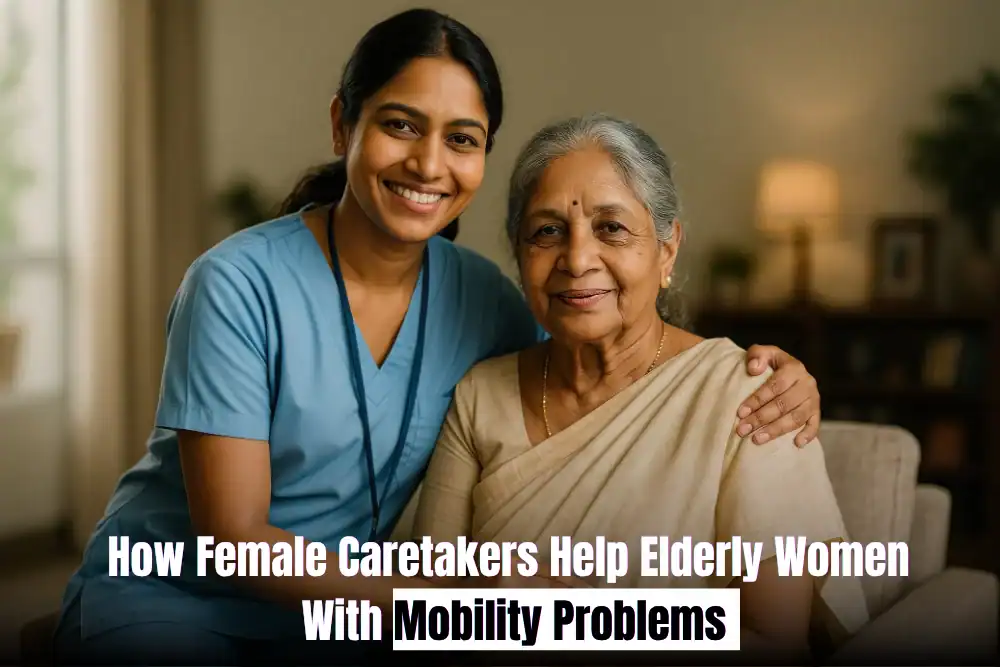
Mobility problems are common among elderly women. As they grow older, walking, standing, climbing stairs, or even getting out of bed can become difficult because of joint pain, arthritis, muscle weakness, fractures, stroke, osteoporosis, or recovery after surgery.
For families, watching a mother or grandmother struggle with movement can be difficult. At the same time, helping an elderly woman move without proper technique can result in falls or injuries to both the senior and the family member.
A trained female caretaker can provide regular mobility assistance while also helping the elderly woman feel comfortable, respected, and confident.
Why Mobility Becomes Difficult With Age
Mobility problems can develop for many reasons, including:
- Weak muscles and reduced physical strength
- Arthritis and joint pain
- Knee or hip problems
- Osteoporosis
- Previous fractures
- Stroke-related weakness or paralysis
- Balance problems
- Dizziness
- Recovery after surgery
- Long periods of bed rest
- Fear of falling
Even when an elderly woman can walk independently, she may need someone nearby for support and safety.
How a Female Caretaker Helps With Daily Movement
1. Helping Her Get Out of Bed
Getting out of bed can be challenging for someone with weak legs, back pain, or balance problems.
A caretaker can assist her in:
- Sitting up safely
- Moving her legs toward the edge of the bed
- Standing gradually
- Maintaining balance
- Moving toward a chair or walking area
The caretaker should avoid pulling or lifting the person unnecessarily and should follow appropriate patient-handling techniques.
2. Assisting With Walking
A caretaker can stay beside the elderly woman while she walks around the house.
This can include assistance while walking:
- From the bedroom to the living room
- To the bathroom
- To the dining area
- Around the house
- In a safe outdoor area, when appropriate
The purpose is not to do all the walking for her. It is to provide support and confidence while encouraging safe movement.
3. Supporting Bathroom Visits
Going to the bathroom can be one of the most difficult and risky activities for seniors with mobility problems.
A female caretaker can help with:
- Walking to the bathroom
- Sitting down and standing up
- Using grab bars or other prescribed aids
- Maintaining privacy
- Personal hygiene after toileting
Having a female caretaker can make these personal activities more comfortable for many elderly women.
4. Helping With Bathing
Bathrooms are one of the most common places for falls among older adults.
A caretaker can assist with:
- Walking into the bathroom
- Sitting on a bathing chair
- Getting up safely
- Washing areas that are difficult to reach
- Drying and dressing afterward
The bathroom should also be kept dry and equipped with suitable safety aids where needed.
5. Helping With Stairs
If an elderly woman has difficulty using stairs, a caretaker can provide support when moving between floors, provided she is medically able to use stairs.
However, if her balance is poor or she has been advised to avoid stairs, the family should follow the doctor’s or physiotherapist’s recommendation rather than asking the caretaker to make her climb them.
Caretakers Can Also Help Prevent Falls
Falls can have serious consequences for older adults. A caretaker can reduce everyday risks by:
- Keeping walking paths clear
- Removing loose objects from the floor
- Ensuring adequate lighting
- Keeping commonly used items within reach
- Encouraging the use of prescribed walking aids
- Staying nearby when the senior is moving
- Helping her avoid rushing to the bathroom or elsewhere
A caretaker cannot eliminate every fall risk, but consistent supervision can make daily movement safer.
Helping Elderly Women Use Walking Aids
Some seniors use:
- Walking sticks
- Walkers
- Wheelchairs
- Transfer chairs
A caretaker can help the senior use these devices as instructed by a healthcare professional.
For example, if a walker has been recommended, the caretaker can ensure that it is available before the senior begins walking and provide support as needed.
The caretaker should not independently change the walking method or introduce exercises that have not been recommended by a qualified professional.
Encouraging Safe Physical Activity
Too much bed rest can lead to further weakness. Depending on the senior’s condition, doctors or physiotherapists may recommend appropriate movement or exercises.
A caretaker can encourage the senior to follow the prescribed routine consistently.
This might include:
- Short walks
- Sitting and standing practice
- Simple movements recommended by a physiotherapist
- Regular changes in position
- Moving around the home instead of remaining in bed all day
The exercises should be based on the senior’s health condition and professional advice.
Female Caretakers Provide More Than Physical Support
Mobility problems can affect an elderly woman’s confidence.
She may start thinking:
“I might fall.”
“I don’t want to trouble my children.”
“I can’t do anything on my own anymore.”
These feelings can cause seniors to avoid movement altogether.
A patient and supportive caretaker can encourage her without making her feel helpless.
Simple things such as saying, “Take your time, I’ll stay with you,” can make movement feel less frightening.
Personal Care Can Become Easier
Mobility problems often affect other daily activities too.
A female caretaker can assist with:
- Dressing
- Grooming
- Hair care
- Toileting
- Bathing
- Feeding
- Moving between rooms
- Getting in and out of bed
This allows the elderly woman to maintain better hygiene and comfort without having to depend completely on family members.
What If the Elderly Woman Is Bedridden?
A bedridden senior requires a different level of care.
She may need assistance with:
- Repositioning in bed
- Hygiene
- Changing clothes
- Toileting and diaper care
- Feeding
- Sitting with support
- Transfer from bed to wheelchair, when medically appropriate
In such situations, families may require a trained caretaker or wardboy, along with a nurse if medical care is required.
When a Nurse May Be Needed Instead
A caretaker is mainly focused on daily living and physical assistance. However, some elderly women require professional nursing care.
A nurse may be required for needs such as:
- Wound dressing
- Injections
- Catheter care
- Feeding tube care
- Monitoring vital signs
- Post-surgery nursing care
- Oxygen-related support
- Other medical procedures prescribed by a doctor
In some cases, a family may need both a female caretaker for daily assistance and a nurse for medical care.
How Families Can Make Mobility Safer at Home
Along with hiring a caretaker, families can make simple changes:
In the Bedroom
- Keep the bed at a suitable height
- Keep the walking area clear
- Keep essential items nearby
- Use adequate lighting at night
In the Bathroom
- Install grab bars where appropriate
- Use an anti-slip surface
- Consider a bathing chair
- Keep the floor dry
Around the House
- Remove loose rugs and clutter
- Improve lighting in corridors
- Keep frequently used items within easy reach
- Avoid unnecessary obstacles
These small changes can make everyday movement considerably easier.
Why Families Should Not Try to Lift a Senior Alone
One common mistake is trying to physically lift an elderly parent without proper training.
This can cause:
- Back injuries to the family member
- Shoulder or joint injuries
- Loss of balance
- Falls
- Further injury to the senior
If your mother needs significant assistance with transfers, ask a trained professional to demonstrate the safest method for her particular condition.
How Lokseva Home Healthcare Can Help
At Lokseva Home Healthcare, we understand that mobility problems can make everyday life difficult for elderly women and their families.
Professional home care can provide support with:
- Walking and mobility
- Getting in and out of bed
- Bathroom assistance
- Bathing and personal hygiene
- Dressing and grooming
- Feeding
- Companionship
- Bedridden care
- Post-hospital recovery support
Depending on the medical requirements, families can also arrange professional nursing support.
The goal is not to take away your mother’s independence. It is to give her the support she needs to remain as active, comfortable, and confident as possible.
Frequently Asked Questions
Is a female caretaker suitable for an elderly woman with mobility problems?
Yes. A trained female caretaker can assist with walking, transfers, bathing, toileting, dressing, and other daily activities while providing comfort and privacy.
Can a caretaker help after knee or hip surgery?
Yes, a caretaker can assist with daily activities and mobility according to the surgeon’s or physiotherapist’s instructions. Medical procedures should be handled by appropriately qualified professionals.
Can a caretaker help a senior use a walker?
Yes, a caretaker can provide support while the senior uses a prescribed walker or other mobility aid, following professional instructions.
Does every elderly woman with mobility problems need a full-time caretaker?
Not necessarily. Some seniors may need only a few hours of assistance, while others may require full-time or continuous care. The appropriate arrangement depends on the person’s mobility, health, and daily needs.
Conclusion
Mobility problems can make an elderly woman feel dependent and afraid of everyday activities. The right female caretaker can make a meaningful difference by providing safe physical assistance, personal care, companionship, and encouragement.
For families, professional support also reduces the physical burden of caring for an elderly parent and provides greater peace of mind.
With the right care at home, your mother does not have to stop living her daily life simply because moving around has become difficult.