
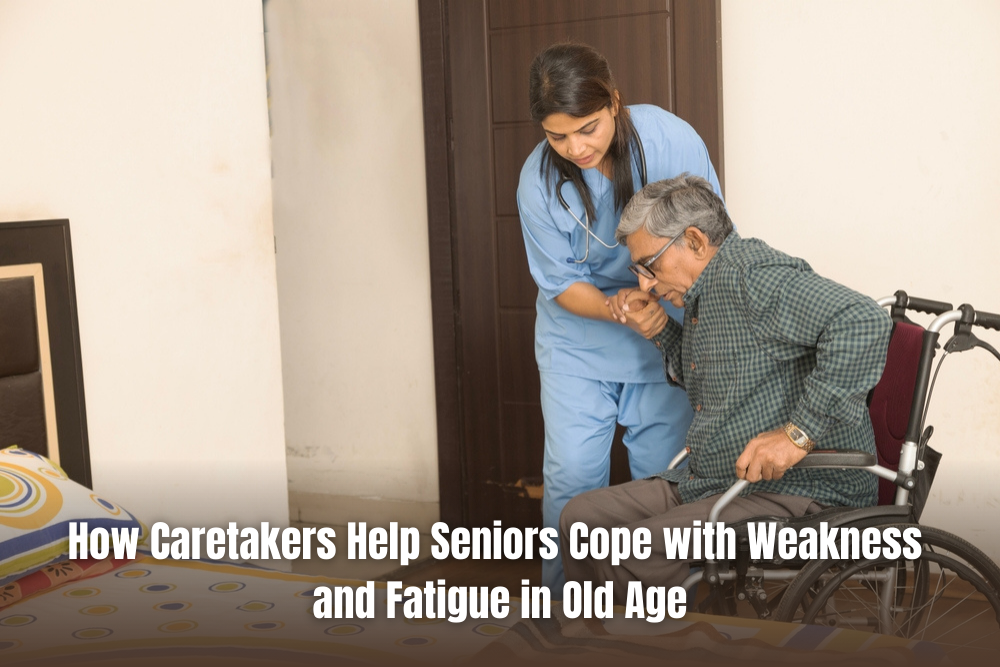
As parents and grandparents grow older, it’s natural for them to experience reduced energy and physical strength. Simple daily activities like climbing stairs, walking to the bathroom, bathing, or even standing up from a chair can start feeling exhausting.
However, ongoing weakness and fatigue are not always “just old age.” In many cases, they may be linked to nutritional deficiencies, chronic illnesses, medication side effects, poor sleep, or emotional stress.
This is where a trained caretaker can make a major difference. Caretakers not only assist seniors physically but also help improve their routine, emotional well-being, confidence, and overall quality of life.
Common Causes of Weakness and Fatigue in Elderly People
Understanding the reasons behind weakness helps families provide the right support. Some common causes include:
- Nutritional Deficiencies: Low levels of iron, calcium, vitamin D, or vitamin B12 can lead to tiredness and muscle weakness.
- Chronic Health Conditions: Diseases such as diabetes, arthritis, heart disease, or kidney problems often reduce stamina and energy levels.
- Medication Side Effects: Certain medicines may cause dizziness, drowsiness, weakness, or reduced appetite.
- Poor Sleep or Mental Stress: Anxiety, loneliness, depression, or disturbed sleep patterns can make seniors feel physically exhausted.
- Lack of Physical Activity: Reduced movement weakens muscles over time, making daily tasks more difficult.
How Caretakers Help Seniors Manage Weakness and Fatigue
1. Assisting with Daily Activities Safely
Caretakers help seniors with bathing, dressing, toileting, and moving around the house safely. This reduces physical strain and lowers the risk of falls or injuries.
2. Encouraging Gentle Exercise and Movement
With medical guidance, caretakers encourage light activities such as walking, stretching, or simple mobility exercises that improve blood circulation, muscle strength, and stamina.
3. Supporting Proper Nutrition and Hydration
Many elderly people feel weak because they don’t eat enough or forget to drink water regularly. Caretakers ensure meals are nutritious, timely, and suited to the senior’s health condition.
4. Managing Medicines Properly
Caretakers make sure medicines are taken on time and observe any unusual side effects such as dizziness or excessive tiredness, informing the family or doctor if needed.
5. Promoting Proper Rest and Sleep
A calm and comfortable environment helps seniors sleep better. Caretakers assist in maintaining regular sleep routines and minimizing unnecessary disturbances.
6. Providing Emotional Support and Companionship
Loneliness and emotional stress can worsen fatigue. Caretakers offer conversation, companionship, and emotional reassurance that help seniors feel happier, calmer, and more motivated.
Why Caretaker Support Is Important for Families
Family members often struggle to balance caregiving with work, children, and personal responsibilities. Having a trained caretaker provides:
- Peace of mind knowing seniors are supervised and safe
- Reduced stress about falls, skipped meals, or missed medicines
- Support with daily care routines and mobility assistance
- More time for families to focus on emotional connection instead of constant caregiving duties
Why Choose Lok Seva Home Health Care
At Lok Seva Home Health Care, we provide compassionate and experienced caregivers trained to support seniors dealing with weakness, fatigue, mobility challenges, and age-related health concerns.
Our caregiver services include:
- Mobility and walking assistance
- Meal support and hydration monitoring
- Medicine reminders and routine management
- Personal hygiene and daily living assistance
- Emotional companionship and encouragement
- Part-time, full-time, and 24/7 care support
We focus on helping elderly patients feel stronger, safer, and more confident while remaining comfortable in their own home.
FAQs
Q1: Is weakness and fatigue normal in old age?
Some tiredness can occur naturally with age, but constant weakness may indicate nutritional deficiencies, illness, medication issues, or emotional stress that should be evaluated.
Q2: Can caretakers help improve strength in elderly people?
Yes. Through proper nutrition support, exercise encouragement, routine care, and emotional companionship, caretakers help seniors gradually regain stamina and confidence.
Q3: When should families consider hiring a caretaker?
If an elderly parent struggles with daily tasks, feels weak often, experiences falls, skips meals or medicines, or requires supervision, caretaker support can be very beneficial.
Q4: Can caretakers stay with seniors full-time?
Yes. Depending on the patient’s needs, part-time, full-time, and 24-hour caregiver services are available.
Q5: Do caretakers also provide emotional support?
Absolutely. Emotional companionship is an important part of caregiving and helps seniors feel less lonely, anxious, or emotionally exhausted.
Conclusion
Weakness and fatigue can greatly affect an elderly person’s confidence, comfort, and quality of life. With proper support, however, seniors can continue living safely, actively, and emotionally comfortably at home.
A trained caretaker provides daily assistance, emotional encouragement, supervision, and companionship that help seniors feel stronger and more independent over time.
At Lok Seva Home Health Care, our dedicated caregivers are committed to helping elderly loved ones live with dignity, care, comfort, and peace of mind every single day.