
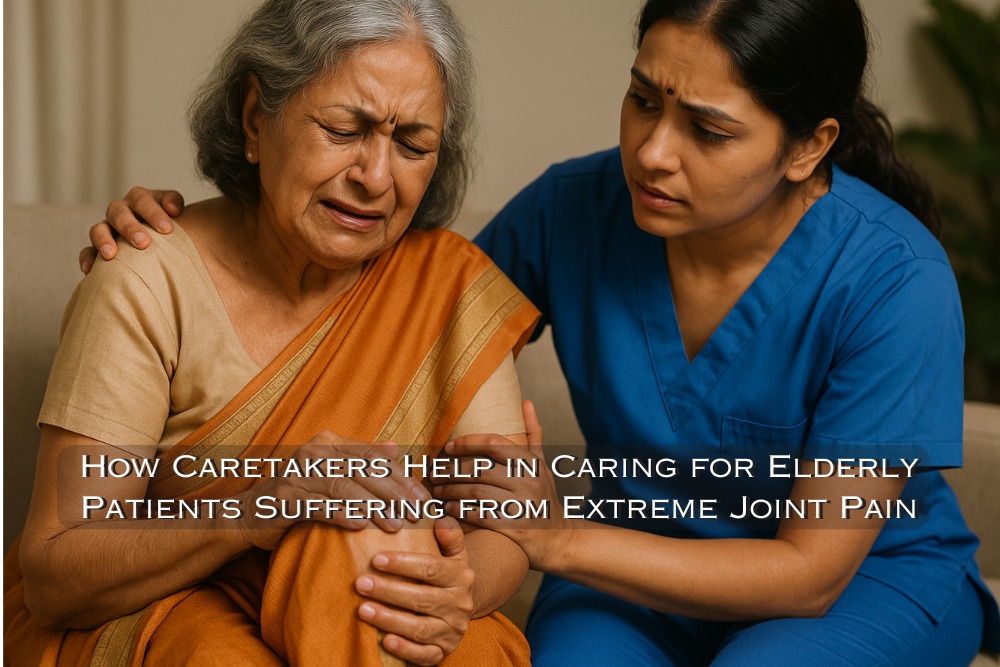
Joint pain is one of the most common and painful health problems faced by elderly people. Conditions such as arthritis, osteoporosis, and age-related joint degeneration can make simple activities like walking, standing, sitting, or even turning in bed extremely difficult. For families, it can be emotionally painful to watch a loved one struggle daily while also trying to manage their care responsibilities.
This is where trained caretakers play an important role. They help seniors manage pain, improve mobility, and maintain comfort and dignity within the safety of their home.
Understanding the Causes of Severe Joint Pain in Seniors
Joint pain in elderly people can happen for many reasons, including:
- Osteoarthritis – wear and tear of cartilage over time
- Rheumatoid Arthritis – inflammation caused by autoimmune conditions
- Osteoporosis – weak and brittle bones causing pain and stiffness
- Post-Surgery Recovery – especially after hip or knee replacement surgeries
- Lack of Movement – reduced physical activity causing stiffness and weakness
As people age, joints naturally become weaker, making movement more painful and limiting independence.
Challenges Families Face While Caring for Seniors with Joint Pain
Caring for an elderly parent with severe joint pain requires more than giving medicines. Families often struggle with:
- Helping them move safely without causing injury
- Fear of falls during walking or bathroom visits
- Managing pain medicines and doctor appointments
- Handling emotional frustration and mood changes caused by chronic pain
- Balancing caregiving with work and family responsibilities
Over time, this can become physically and emotionally exhausting for family members.
How Caretakers Help Elderly Patients with Severe Joint Pain
1. Assisting with Safe Mobility
Caretakers help seniors move safely using walkers, wheelchairs, or support belts. They assist with standing, sitting, walking, and repositioning to reduce stiffness and discomfort.
2. Helping with Daily Activities
Simple tasks like bathing, dressing, toileting, or eating can become painful for seniors with joint problems. Caretakers provide support while maintaining the senior’s dignity and comfort.
3. Supporting Physiotherapy and Exercises
Caretakers encourage gentle stretching and mobility exercises recommended by doctors or physiotherapists. Regular movement helps reduce stiffness and improves flexibility.
4. Medication and Pain Relief Support
They ensure medicines are given on time and assist with pain-relief methods such as hot/cold compresses or applying prescribed ointments.
5. Monitoring Changes in Condition
Caretakers observe swelling, increased pain, difficulty moving, or signs of discomfort and quickly inform family members or doctors if needed.
6. Providing Emotional Support
Living with constant pain can lead to sadness, frustration, or loneliness. Caretakers offer companionship, encouragement, and emotional reassurance to keep seniors mentally positive.
Benefits of Hiring a Caretaker for Joint Pain Patients
- Reduced physical strain on family members
- Lower risk of falls and accidents
- Regular exercise and movement support
- Better medicine and pain management
- Improved comfort, dignity, and quality of life
- Peace of mind for families living away or managing busy schedules
Why Choose Lok Seva Home Health Care
At Lok Seva Home Health Care, we provide trained and compassionate caretakers experienced in supporting elderly patients with arthritis, severe joint pain, mobility issues, and post-surgery recovery.
Our caretakers are trained in:
- Safe walking and mobility assistance
- Helping with physiotherapy routines
- Daily hygiene and comfort support
- Pain-relief care techniques
- Emotional companionship and senior support
We treat every elderly patient with patience, respect, and kindness — ensuring they feel safe, cared for, and supported every day.
FAQs
Q1: Can caretakers help during physiotherapy sessions?
Yes. Caretakers assist seniors with physiotherapy exercises and help maintain regular movement safely.
Q2: Do caretakers provide massage therapy?
Caretakers can apply prescribed oils or ointments, but professional therapeutic massages should only be done under medical guidance.
Q3: Is home care better than hospital care for joint pain?
In most cases, yes. Home care provides comfort, emotional peace, and personal attention unless surgery or advanced treatment is required.
Q4: Can caretakers support bedridden joint pain patients?
Yes. They help with repositioning, hygiene, feeding, mobility support, and preventing bedsores for bedridden seniors.
Q5: Can caretakers help prevent falls?
Absolutely. They assist seniors during movement and create safer routines to reduce fall risks at home.
Conclusion
Severe joint pain affects more than mobility — it affects confidence, independence, and emotional well-being. A trained caretaker helps elderly patients live more comfortably by providing mobility support, pain management assistance, and emotional companionship.
At Lok Seva Home Health Care, we are committed to providing compassionate and professional elderly care services that improve quality of life for seniors and peace of mind for families.