
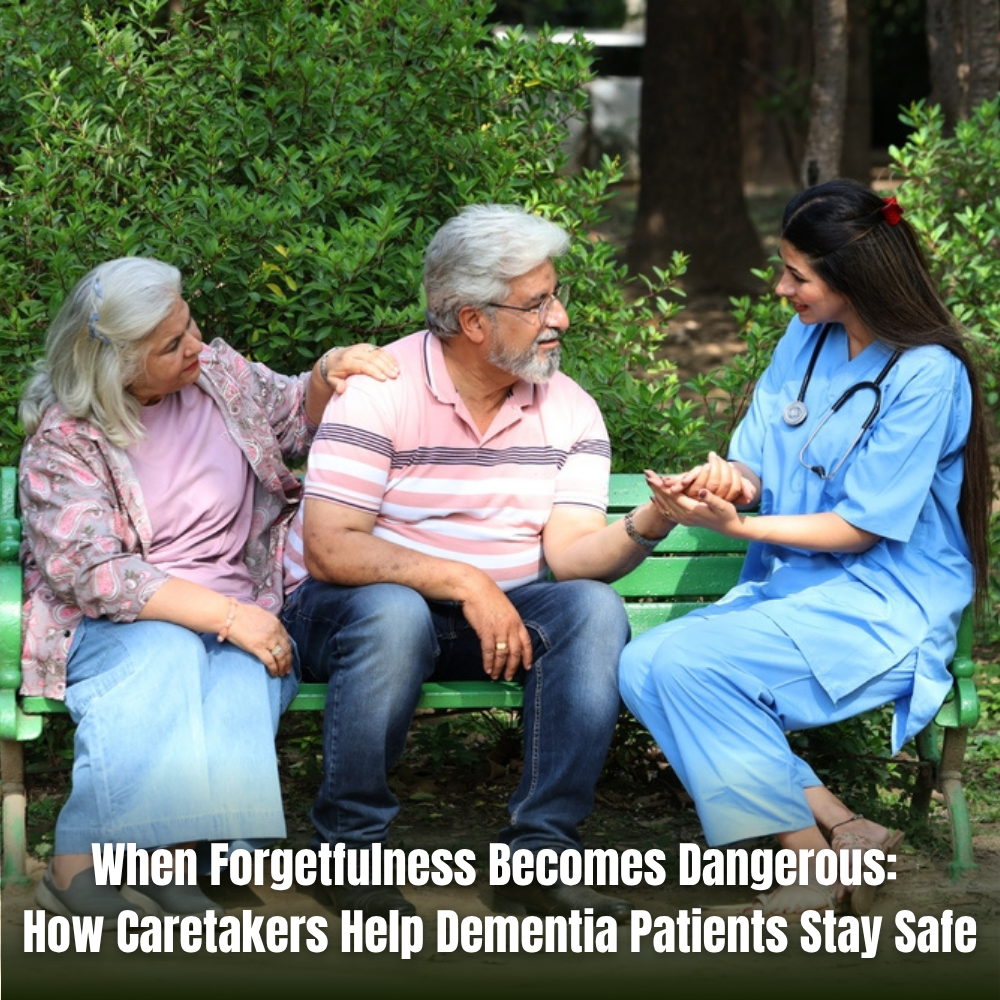
We all forget things sometimes a misplaced key, a forgotten name, or why we entered a room. But for elderly parents living with dementia, forgetfulness can become much more serious. It can affect their safety, health, and ability to manage daily life independently.
An elderly parent may forget to switch off the gas, wander outside alone, skip medicines, or become confused even inside their own home. For families, this creates constant stress and fear especially when balancing work, children, or living far away.
This is where trained caretakers become essential. They provide supervision, emotional support, and structured care that helps dementia patients live safely and comfortably at home while giving families peace of mind.
When Forgetfulness Becomes Dangerous
Mild forgetfulness is common with aging, but dementia causes progressive memory loss that affects judgment, awareness, and behavior.
Common risks faced by dementia patients include:
- Leaving the stove or electrical appliances switched on
- Missing medicines or taking the wrong dosage
- Wandering away from home and getting lost
- Difficulty recognizing familiar people or places
- Skipping meals or forgetting to drink water
- Poor hygiene or resistance to bathing and dressing
- Sudden emotional outbursts, anxiety, or aggression
Without proper supervision, these situations can quickly turn into medical emergencies or accidents.
How Caretakers Help Dementia Patients Stay Safe
1. Creating a Structured Daily Routine
Caretakers maintain fixed schedules for meals, medicines, sleep, and activities. Dementia patients feel calmer and safer when daily routines remain predictable.
2. Preventing Household Accidents
Trained caretakers ensure the home environment is safe by monitoring cooking activities, preventing falls, checking doors, and removing hazards like slippery floors or loose wires.
3. Managing Medicines Properly
Caretakers ensure medicines are taken on time and in the correct doses. This reduces the risk of skipped medications, overdoses, or confusion.
4. Providing Emotional Reassurance
Dementia often causes confusion, fear, and anxiety. Caretakers communicate calmly, offer reassurance, and help seniors feel emotionally secure throughout the day.
5. Preventing Wandering
Many dementia patients wander due to confusion or restlessness. Caretakers supervise movements carefully and keep patients engaged in safe activities such as music, conversations, photo albums, or light exercises.
6. Monitoring Changes in Behavior
Caretakers observe changes in sleep, appetite, mood, or confusion levels and update families or doctors immediately if concerns arise.
How Caretakers Support Families
Caring for someone with dementia can become emotionally exhausting for family members. Professional caretakers help reduce this burden by:
- Providing constant supervision and companionship
- Reducing caregiver stress and burnout
- Helping families balance work and personal responsibilities
- Ensuring seniors are never left alone during risky situations
- Creating a calmer and safer home environment
This support allows families to spend more meaningful and emotionally connected time with their loved one instead of constantly worrying about safety.
Why Choose Lok Seva Home Health Care
At Lok Seva Home Health Care, we provide experienced and compassionate caretakers trained in dementia and memory care support.
Our dementia care services include:
- 24/7 supervision and safety monitoring
- Medicine reminders and routine management
- Emotional companionship and calm communication
- Support with hygiene, feeding, and mobility
- Assistance during night-time confusion or restlessness
- Patient-centered care with dignity and respect
We understand how emotionally difficult dementia can be for families, and our caregivers are dedicated to making daily life safer, calmer, and more comfortable for your loved ones.
FAQs
Q1: How do I know if my parent’s forgetfulness could be dementia?
If memory loss starts affecting daily life such as forgetting medicines, getting lost, confusion, or personality changes it’s important to consult a doctor for evaluation.
Q2: Can dementia patients safely stay at home?
Yes. With proper supervision and trained caregiving support, many dementia patients can continue living safely and comfortably at home.
Q3: Do caretakers provide night-time dementia care?
Yes. Full-time and 24/7 caretakers can assist with night-time confusion, wandering, and restlessness commonly seen in dementia patients.
Q4: Can caretakers handle aggressive or emotional behavior?
Yes. Trained caretakers know how to respond calmly and compassionately to agitation, anxiety, or emotional outbursts.
Q5: Will caretakers update family members regularly?
Yes. Families receive regular updates about the patient’s routine, health, behavior, and overall condition.
Conclusion
When forgetfulness becomes a safety concern, elderly parents need more than occasional support — they need structured care, supervision, and emotional reassurance.
A trained caretaker helps dementia patients stay safe, follow healthy routines, and continue living with dignity and comfort at home.
At Lok Seva Home Health Care, our compassionate caregivers provide trusted dementia care support designed to protect your loved ones while giving your family peace of mind every single day.