
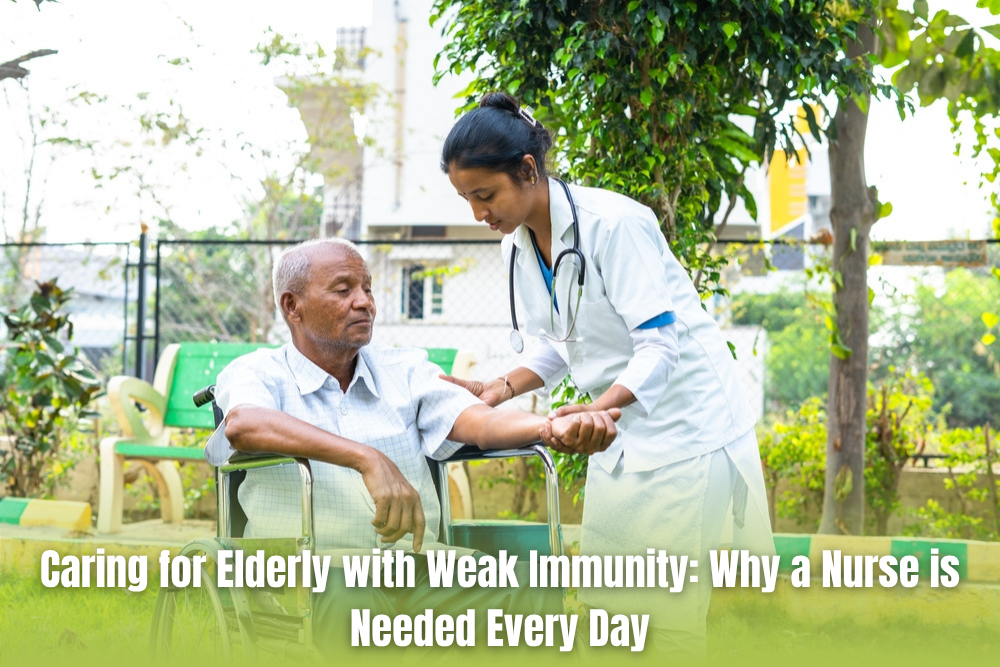
As our parents or grandparents grow older, their immune system naturally becomes weaker. This makes them more vulnerable to infections, delayed healing, and complications from even minor illnesses. For families, this often creates constant worry—are they truly safe and healthy when we’re not around?
In this article, we’ll explain the risks of low immunity in elderly people, how a daily caregiver or home nurse can help, and why professional elderly care at home can make a major difference in your loved one’s health, safety, and comfort.
Why Do Elderly People Have Weaker Immunity?
As the body ages, the immune system becomes slower and less effective at fighting infections. Seniors also commonly face chronic health conditions that weaken the body further.
Common reasons for weak immunity in seniors include:
- Slower immune response to bacteria and viruses
- Reduced white blood cell activity
- Chronic illnesses like diabetes, heart disease, kidney disorders, or respiratory conditions
- Poor nutrition or low appetite
- Lack of physical activity
- Stress, loneliness, or poor sleep
Because of this, elderly individuals often fall sick more easily and take longer to recover from infections or injuries.
Common Health Risks Caused by Weak Immunity
Low immunity increases the risk of several health complications in seniors.
1. Frequent Cold, Cough, or Fever
Minor viral infections can quickly become serious for elderly people with weak immunity.
2. Slow Wound Healing
Even small cuts or bruises may take much longer to heal, increasing infection risk.
3. Urinary Tract Infections (UTIs)
UTIs are very common in bedridden or elderly patients and can become severe if unnoticed.
4. Skin Infections and Bedsores
Limited mobility and poor hygiene can lead to skin breakdown, rashes, and pressure sores.
5. Serious Complications from Minor Illnesses
Conditions like flu, fever, or mild respiratory infections may lead to pneumonia or hospitalization if not treated early.
How a Daily Caregiver or Nurse Helps Seniors with Weak Immunity
1. Daily Health Monitoring
A caregiver or nurse regularly checks:
- Temperature
- Blood pressure
- Blood sugar levels
- Pulse and oxygen levels
Regular monitoring helps detect infections or health changes early before they become serious.
2. Timely Medication Management
Many elderly people forget medicines or accidentally take incorrect doses. Caregivers ensure:
- Medicines are given on time
- Correct dosage is followed
- Supplements are taken properly
- Side effects are identified quickly
3. Nutritional Support for Better Immunity
Healthy food plays a major role in strengthening immunity. Caregivers assist with:
- Nutritious meal preparation
- Hydration reminders
- Feeding assistance if needed
- Monitoring appetite and eating habits
Balanced nutrition supports faster recovery and stronger immunity.
4. Hygiene and Infection Prevention
Maintaining cleanliness is essential for seniors with low immunity. Caregivers help with:
- Bathing and grooming
- Changing clothes and bedding regularly
- Toileting and incontinence care
- Maintaining a clean and sanitized environment
Good hygiene significantly reduces the chances of infections.
5. Wound Care and Bedsore Prevention
Bedridden seniors are especially vulnerable to pressure sores and infections. Nurses and caregivers help by:
- Repositioning the patient regularly
- Monitoring skin condition daily
- Providing basic wound care
- Keeping the skin clean and dry
6. Doctor Visits and Vaccination Support
Caregivers help families stay organized by:
- Scheduling doctor appointments
- Tracking medical reports
- Providing reminders for flu or pneumonia vaccines
- Monitoring recovery after treatment
Emotional Benefits of Daily Care
Weak immunity often comes with emotional stress, loneliness, and anxiety. A caregiver provides not only physical support but also companionship and reassurance.
With daily caregiving support:
- Seniors feel safer and less isolated
- Families experience less stress and worry
- Health problems are addressed quickly
- Overall quality of life improves significantly
Professional Elderly Care at Home
At Lok Seva Home Health Care, we provide trained nurses and caregivers experienced in supporting seniors with weak immunity, chronic illnesses, and age-related health challenges.
Our caregivers are trained in:
- Daily health monitoring
- Hygiene and infection prevention
- Medication management
- Bedridden patient care
- Compassionate emotional support
We help families across India ensure their elderly loved ones receive safe, respectful, and attentive care every day.
FAQs: Elderly Care for Weak Immunity
Q1. How do I know if my parent has weak immunity?
Frequent infections, slow recovery, fatigue, recurring fever, or repeated hospital visits may indicate low immunity in seniors.
Q2. Can caregivers help prevent infections at home?
Yes, trained caregivers maintain hygiene, monitor symptoms early, ensure proper nutrition, and help reduce infection risks significantly.
Q3. Should I hire a nurse or a caretaker?
If your parent needs medical support like injections, wound dressing, or oxygen monitoring, a nurse is ideal. For daily assistance with hygiene, meals, and supervision, a trained caretaker is suitable.
Q4. Is home care safer than hospital care for elderly people with low immunity?
In many cases, yes. Home care reduces exposure to hospital-acquired infections and allows seniors to recover in a comfortable environment.
Q5. Are daily elderly care services available in India?
Yes, Lok Seva Home Health Care provides professional nurses and caregivers for elderly home care across multiple Indian cities.
Conclusion
Elderly parents with weak immunity require more than occasional attention—they need daily care, monitoring, hygiene support, and emotional reassurance to stay healthy and safe.
A trained caregiver or nurse acts as a watchful companion who helps prevent complications, manage health conditions, and improve your loved one’s quality of life every day.
If you’re looking for trusted elderly home care services, visit Lok Seva Home Health Care and ensure your loved ones receive the professional care, comfort, and dignity they deserve.