Managing diabetes in elderly individuals requires constant attention to insulin administration, blood sugar levels, and diet control. Many families struggle to provide the necessary care due to their busy schedules or lack of medical expertise. In such cases, a trained nurse can be a valuable support system in ensuring proper diabetes management.
This article will explore how nurses help elderly diabetic patients with insulin management, diet planning, and overall health monitoring. By the end, you will have a clear understanding of the benefits of professional nursing care for elderly parents dealing with diabetes.
Why Diabetes Management is Critical for the Elderly
Diabetes, particularly Type 2 diabetes, is common in elderly individuals and can lead to severe complications if not managed properly. Some key risks include:
- Fluctuating blood sugar levels causing dizziness, confusion, or unconsciousness.
- Nerve damage (neuropathy) leading to foot ulcers and infections.
- Vision problems (retinopathy) that may result in blindness.
- Kidney issues (nephropathy) requiring dialysis in severe cases.
- Heart disease and stroke due to uncontrolled sugar levels.
Proper care, including insulin regulation and a balanced diet, can prevent these complications and improve the quality of life for elderly diabetic patients.
How a Nurse Helps with Insulin and Medication Management
Administering insulin and managing diabetes medication can be complex, especially for elderly individuals who may forget doses or struggle with injections. A trained nurse can assist in the following ways:
1. Monitoring Blood Sugar Levels
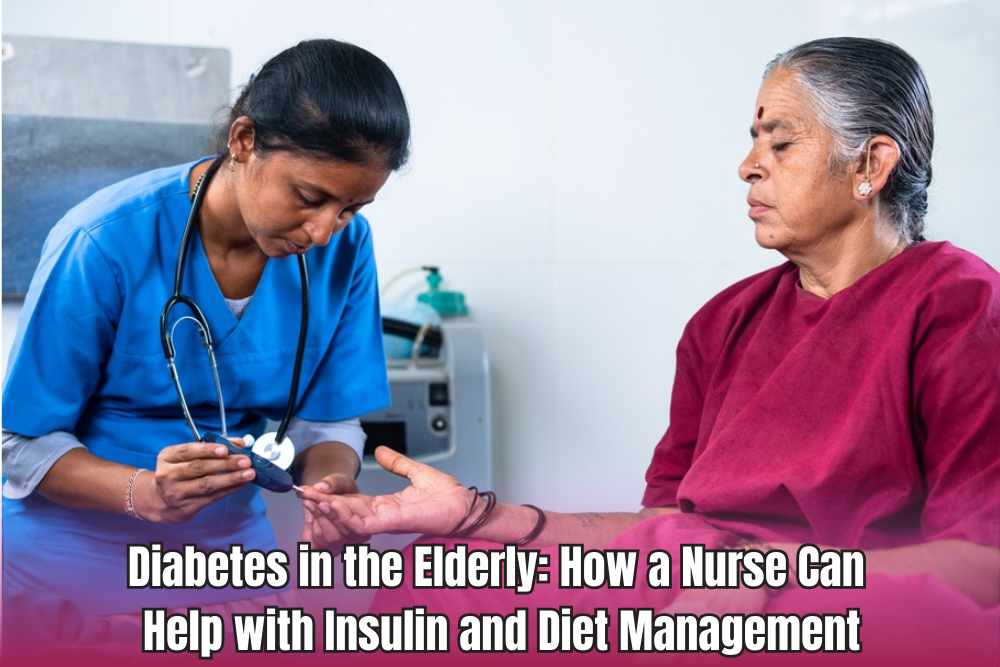
- Regularly checking blood sugar using a glucometer.
- Identifying trends in sugar levels to adjust medication or diet accordingly.
- Preventing extreme highs (hyperglycemia) or lows (hypoglycemia).
2. Administering Insulin Safely
- Ensuring the correct insulin dose at the right time.
- Injecting insulin properly to avoid pain or skin issues.
- Managing insulin storage and usage to maintain effectiveness.
3. Managing Other Diabetes Medications
- Ensuring timely intake of oral medications.
- Watching for side effects or interactions with other drugs.
- Adjusting doses based on doctor’s advice.
Diet Management: How Nurses Help in Meal Planning
A healthy diet is crucial for diabetes management. Elderly individuals may struggle to plan meals or prepare nutritious food. Nurses can assist by:
1. Creating a Diabetes-Friendly Diet Plan
- Encouraging fiber-rich foods like vegetables, whole grains, and nuts.
- Limiting high-sugar and processed foods.
- Suggesting portion control to maintain balanced sugar levels.
2. Ensuring Proper Hydration
- Encouraging water intake to prevent dehydration.
- Limiting sugary drinks like packaged juices or soft drinks.
3. Meal Preparation Assistance
- Helping elderly patients follow their diet plans.
- Ensuring meals are cooked with minimal oil and salt.
Additional Support Nurses Provide for Elderly Diabetics
Apart from insulin and diet management, nurses help with:
- Foot Care – Checking for wounds or infections to prevent diabetic foot ulcers.
- Exercise Assistance – Encouraging light physical activity to regulate blood sugar.
- Emergency Care – Handling situations like sudden drops or spikes in blood sugar.
- Emotional Support – Helping seniors cope with stress and depression caused by diabetes.
How Home Nursing Gives Peace of Mind to Families
Many families struggle to provide round-the-clock care for elderly diabetic parents. A trained nurse ensures that all medical needs are met, reducing the stress and responsibility on family members.
- Family members can focus on work and personal responsibilities without constant worry.
- Seniors receive timely medication, insulin administration, and balanced meals.
- Professional monitoring helps prevent diabetes-related emergencies.
- Elderly patients receive emotional companionship and encouragement.
Having a professional nurse at home provides peace of mind, knowing your loved one is receiving consistent and compassionate care.
When Should You Consider Hiring a Nurse for Diabetes Care?
You should consider professional nursing care if your elderly parent:
- Requires regular insulin injections and monitoring.
- Frequently experiences low or high blood sugar episodes.
- Has mobility issues or difficulty managing medications independently.
- Needs support with meal planning and diabetic-friendly nutrition.
- Has diabetes-related complications such as foot ulcers or kidney issues.
FAQs About Diabetes Care for the Elderly
1. How often should an elderly diabetic get their blood sugar checked?
It depends on the condition, but usually before meals and at bedtime or as advised by a doctor.
2. Can a nurse help with diabetic foot care?
Yes, nurses check for wounds, ensure proper hygiene, and prevent infections in diabetic patients.
3. What foods should elderly diabetics avoid?
They should avoid sugary foods, refined carbs, deep-fried items, and high-sodium meals to control blood sugar.
4. Can a nurse assist with insulin injections at home?
Yes, a trained nurse can safely administer insulin injections and monitor sugar levels.
5. How can I hire a nurse for diabetes care in India?
You can contact Lok Seva Home Health Care for trained nurses who specialize in elderly diabetes care. Visit Lok Seva Home Health Care for more details.
Conclusion
Managing diabetes in elderly parents requires constant monitoring, insulin management, and proper diet control. A professional home nurse can ensure that seniors receive timely medication, balanced meals, and emergency care, reducing the burden on family members.
If you are looking for a trained nurse to help with diabetes management, Lok Seva Home Health Care provides expert caregivers and nursing staff to support your loved ones.
Ensure the best care for your elderly parents — visit Lok Seva Home Health Care to learn more about our home nursing and elderly care services.