
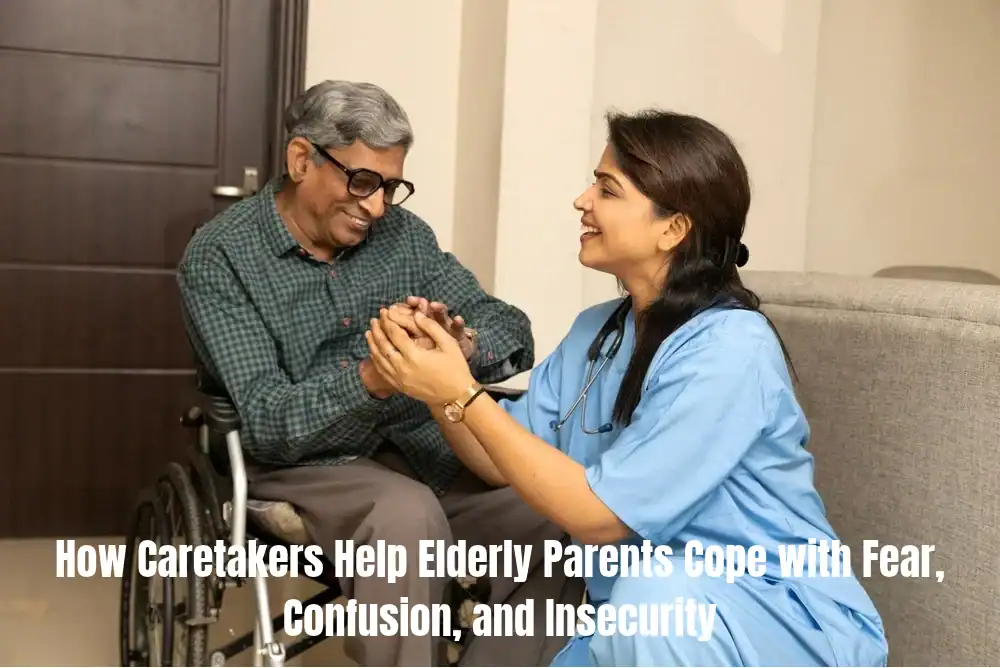
As parents grow older, they may start feeling afraid, confused, or insecure about things that never bothered them before. Living alone, declining health, memory problems, or difficulty performing everyday activities can make elderly people feel vulnerable.
Your mother may become afraid of falling when nobody is around. Your father may feel confused about medicines or daily routines. Some elderly parents may repeatedly ask whether someone will be there to help them if something goes wrong.
For families, especially children living away from their parents, these changes can be worrying.
A trained caretaker can provide daily assistance, companionship, and reassurance, helping elderly parents feel safer and more confident at home.
Why Do Elderly Parents Experience Fear and Insecurity?
Ageing brings several physical and emotional changes. Some common reasons elderly parents may feel afraid or insecure include:
- Fear of falling: Weakness, joint pain, and balance problems can make walking difficult.
- Living alone: Parents may worry about who will help during an emergency.
- Memory problems: Forgetfulness can make familiar situations confusing.
- Health concerns: Chronic illnesses and frequent hospital visits can create anxiety.
- Loss of independence: Depending on others for bathing, walking, or eating may affect confidence.
- Loneliness: Limited social interaction can increase feelings of isolation.
These feelings should not simply be dismissed as a normal part of ageing. New or worsening confusion, in particular, may require medical attention.
1. Providing a Sense of Safety
One of the biggest fears elderly parents experience is being alone when they need help.
A caretaker can provide reassurance by assisting with:
- Walking around the house
- Getting in and out of bed
- Bathroom visits
- Bathing and dressing
- Meals and daily activities
Knowing that someone is nearby to help can reduce the fear of falling or struggling alone.
2. Maintaining a Familiar Daily Routine
Confusion can become worse when elderly parents do not have a regular routine.
A caretaker can help maintain consistent timings for:
- Waking up and sleeping
- Bathing and grooming
- Breakfast, lunch, and dinner
- Medicine reminders
- Rest and daily activities
- Doctor-recommended exercises
A predictable routine can help elderly parents feel more comfortable and in control of their day.
3. Offering Companionship and Emotional Support
Sometimes, elderly parents do not need help with a physical task. They simply need someone to listen.
A caretaker can spend time talking with them, listening to their concerns, accompanying them during simple activities, or helping them connect with family members.
Small gestures, such as sitting together during tea or listening patiently to a repeated story, can make an elderly person feel valued and less lonely.
Companionship can be just as meaningful as physical assistance.
4. Helping Parents Who Experience Confusion
Some elderly people experience forgetfulness or confusion because of dementia, illness, medicines, or other health conditions.
A caretaker can help by:
- Giving gentle reminders
- Explaining activities calmly
- Keeping familiar belongings nearby
- Avoiding arguments when the parent is confused
- Maintaining a peaceful environment
- Informing family members about changes in behaviour
If confusion appears suddenly or becomes significantly worse, the family should seek prompt medical evaluation, as it may be caused by an illness or another treatable problem.
5. Building Confidence Through Daily Assistance
When elderly parents begin struggling with basic activities, they may feel that they are becoming a burden on their children.
A good caretaker helps without making them feel helpless.
For example, if your mother can eat independently but needs help serving food, the caretaker should assist only where necessary. If your father can walk safely with a prescribed walker, the caretaker can encourage him to continue using it.
Allowing seniors to participate in their daily activities helps preserve their independence and self-respect.
6. Reducing Night-Time Fear and Anxiety
Some elderly parents become more anxious at night.
They may worry about falling while visiting the bathroom, feel disoriented after waking, or become frightened when alone.
Depending on their needs, a night-time caretaker can help with bathroom visits, mobility, personal hygiene, and reassurance.
For parents who need frequent overnight assistance, families may consider a dedicated night shift or a suitable continuous-care arrangement.
7. Keeping Families Informed
When children live in another city or abroad, they may not immediately notice changes in their parents’ emotional well-being.
A caretaker can help families stay informed about:
- Changes in mood
- Increasing forgetfulness
- Sleep difficulties
- Reduced appetite
- Unusual fear or anxiety
- Changes in daily behaviour
Regular communication helps families recognise when their parents may need additional emotional or medical support.
When Should Families Seek Medical Help?
Although companionship and routine can help, not every emotional or behavioural change can be managed through caregiving alone.
Consult a healthcare professional if your parent experiences:
- Sudden or worsening confusion
- Severe anxiety or panic
- Persistent sadness or withdrawal
- Hallucinations
- Major sleep disturbances
- Significant changes in personality or behaviour
A caretaker can provide support, but medical assessment is important when symptoms may be related to illness, dementia, depression, or medication effects.
How Lokseva Home Healthcare Can Help
At Lokseva Home Healthcare, we understand that elderly care is not limited to bathing, feeding, medicines, or mobility.
Older parents also need patience, companionship, emotional reassurance, and someone who understands their daily difficulties.
Our home care services help families arrange support for:
- Daily personal care
- Walking and mobility
- Bathing and hygiene
- Feeding assistance
- Companionship
- Elderly supervision
- Bedridden care
- Support with daily routines
- Home nursing when medically required
Our aim is to help elderly parents feel safe, comfortable, respected, and cared for in their own homes, while giving families greater peace of mind.
Frequently Asked Questions
Why does my elderly mother suddenly feel afraid of being alone?
Fear of falling, health concerns, loneliness, memory changes, or previous frightening experiences may contribute. If the fear is sudden, severe, or unusual, seek medical advice.
Can a caretaker help an elderly parent with anxiety?
A caretaker can provide companionship, reassurance, a regular routine, and practical assistance. However, persistent or severe anxiety may require professional medical or mental health support.
How can a caretaker help an elderly parent with dementia?
A caretaker can maintain familiar routines, provide gentle reminders, support everyday activities, and help maintain a safe environment.
Is a full-time caretaker necessary for elderly parents who feel insecure?
Not always. Some parents may benefit from daytime companionship, while others need more extensive supervision because of mobility problems, confusion, or safety concerns.
Conclusion
Fear, confusion, and insecurity can gradually affect an elderly parent’s confidence and quality of life. What may seem like a small worry to younger family members can feel overwhelming to someone who is physically weak, unwell, or living alone.
The right caretaker can make a meaningful difference through patience, companionship, practical assistance, and consistent reassurance.
Most importantly, professional home care allows elderly parents to continue living in familiar surroundings while feeling supported, respected, and less alone.
At Lokseva Home Healthcare, we believe elderly parents deserve more than assistance with everyday tasks. They deserve care that makes them feel secure, valued, and understood.
Because sometimes, knowing someone is there for you is the greatest comfort of all.