
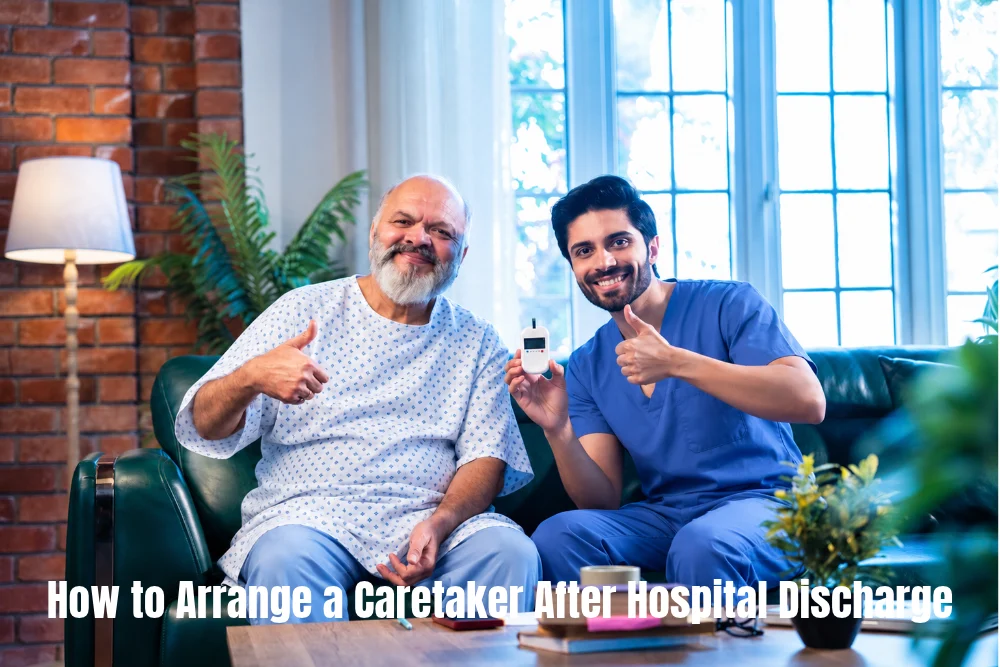
Bringing an elderly parent home after a hospital stay is a moment of relief for the entire family. After days or weeks of treatment, everyone looks forward to having their loved one back in familiar surroundings.
However, hospital discharge does not always mean complete recovery.
Your mother may still be too weak to walk independently. Your father may need help getting out of bed after surgery. A patient recovering from a stroke may require assistance with feeding, bathing, and everyday movement.
For families, this raises an important question: How do we arrange the right caretaker at home after hospital discharge?
A trained caretaker can help elderly patients manage daily activities, maintain personal hygiene, move safely, and follow their recovery routine while reducing the physical burden on family members.
In this guide, we explain when to arrange a caretaker, what responsibilities they can handle, how to prepare your home, and what families should check before bringing an elderly patient home.
Why Elderly Patients May Need a Caretaker After Hospital Discharge
Even after successful hospital treatment, elderly patients may take time to regain their strength and independence.
Hospitalisation can leave seniors feeling physically weak, tired, confused, or uncomfortable with movement.
Some common challenges after discharge include:
- Difficulty getting out of bed
- Weakness while walking
- Pain after surgery
- Difficulty bathing or changing clothes
- Needing help with toileting
- Reduced appetite
- Difficulty sitting or standing
- Fear of falling
- Trouble managing daily routines
- Increased dependence on family members
For example, an elderly mother recovering from knee surgery may be medically fit to return home but still unable to use the bathroom without assistance.
Similarly, a father recovering from pneumonia may feel extremely tired after walking just a few steps.
A caretaker can provide regular physical assistance during this recovery period.
1. Start Planning Before the Hospital Discharge
One of the most common mistakes families make is waiting until the patient reaches home before looking for a caretaker.
By then, the family may realise that the patient cannot walk to the bathroom, get out of bed, or manage personal hygiene independently.
Whenever possible, start discussing home care arrangements before the expected discharge date.
Speak with the treating doctor or hospital discharge team about:
- The patient’s expected recovery period
- Mobility restrictions
- Assistance required for bathing and toileting
- Whether the patient can walk independently
- Any special equipment needed at home
- Whether a nurse or physiotherapist is also required
- Warning signs that require medical attention
This will help you understand what kind of support to arrange.
2. Understand What the Patient Can and Cannot Do
Before hiring a caretaker, assess the elderly patient’s ability to manage everyday activities.
Ask these questions:
- Can the patient sit up without help?
- Can they stand independently?
- Can they walk to the bathroom?
- Can they eat without assistance?
- Can they change clothes?
- Do they need diaper care?
- Can they get in and out of bed?
- Do they need help during the night?
- Are they experiencing confusion or memory problems?
The answers will help you decide whether the patient needs a few hours of assistance, daytime care, overnight support, or more extensive care.
The right care arrangement should depend on the patient’s condition, not simply their age.
3. Decide Whether You Need a Caretaker, Nurse, or Wardboy
Families often get confused between these three types of home healthcare professionals.
Understanding their responsibilities can help you choose correctly.
Caretaker
A caretaker helps with non-medical daily activities such as:
- Bathing and dressing
- Toileting
- Feeding
- Walking
- Getting in and out of bed
- Grooming
- Companionship
- Medicine reminders
- General supervision
A caretaker is suitable when the elderly patient primarily needs assistance with daily living.
Home Nurse
A qualified nurse may be required when the patient needs medical care such as:
- Wound dressing
- Prescribed injections
- Catheter care
- Feeding tube care
- Post-operative nursing
- Clinical monitoring
- Other medical procedures prescribed by the doctor
Wardboy or Patient Attendant
A wardboy or patient attendant can assist patients who need considerable physical support.
This may include:
- Bedside hygiene
- Diaper changing
- Repositioning
- Physical assistance during transfers
- Changing clothes
- Feeding assistance
- Mobility support
A patient recovering from major surgery, stroke, or prolonged bed rest may require both a caretaker or attendant and professional nursing support.
4. Choose a Caretaker With Relevant Experience
Not every caretaker has experience handling every type of patient.
Before hiring, explain the patient’s condition clearly.
For example, if your father has undergone hip replacement surgery, ask whether the caretaker has previously assisted patients with similar mobility restrictions.
If your mother is recovering from a stroke, ask about experience supporting patients with weakness or paralysis.
Look for experience in:
- Elderly care
- Post-surgery recovery
- Stroke recovery
- Bedridden patient care
- Mobility assistance
- Personal hygiene
- Feeding support
- Safe patient transfers
A caretaker who understands the patient’s limitations is better prepared to provide appropriate assistance.
5. Prepare the Home Before the Patient Arrives
The home environment plays an important role in recovery.
An elderly patient returning from the hospital may not be able to move around the house as easily as before.
Small changes can make everyday activities safer.
Bedroom Preparation
- Keep the bed at a suitable height.
- Ensure there is enough space around the bed.
- Keep water, tissues, and essential items within reach.
- Arrange a bedside commode if recommended.
- Ensure proper lighting, especially at night.
- Keep the route to the bathroom clear.
Bathroom Preparation
- Install grab bars where appropriate.
- Keep the floor dry.
- Use a suitable anti-slip surface.
- Arrange a bathing chair if necessary.
- Make sure the patient can access the toilet safely.
Additional Equipment
Depending on the doctor’s recommendations, the patient may require:
- Walker
- Wheelchair
- Hospital bed
- Bedside commode
- Pressure-relieving mattress
- Other prescribed mobility or medical equipment
Do not purchase equipment simply because it is commonly used. Ask the healthcare team what is suitable for the patient’s condition.
6. Share the Hospital Discharge Instructions With the Caretaker
The hospital discharge summary contains important information about the patient’s recovery.
Before care begins, explain the relevant instructions to the caretaker.
These may include:
- Mobility restrictions
- Bathing precautions
- Feeding instructions
- Exercise recommendations
- Follow-up appointments
- Personal hygiene requirements
- Activities the patient should avoid
For example, a patient recovering from hip surgery may have specific movement restrictions.
The caretaker must understand these instructions rather than using the same approach for every patient.
Keep a copy of the discharge summary and relevant instructions easily accessible at home.
7. Plan Assistance With Walking and Movement
After hospitalisation, elderly patients may feel weak or unsteady.
Some may be afraid to walk because they worry about falling.
A caretaker can assist with:
- Sitting up in bed
- Standing safely
- Moving from bed to chair
- Walking to the bathroom
- Using prescribed walking aids
- Following approved daily movement routines
However, the caretaker should not force movement or independently introduce exercises.
Movement and rehabilitation should follow the treating doctor’s or physiotherapist’s instructions.
For patients who require substantial lifting or transfers, trained handling techniques and suitable equipment may be necessary.
8. Arrange Support for Bathing and Personal Hygiene
Personal hygiene is often one of the biggest challenges after discharge.
An elderly patient may be unable to bathe independently because of:
- Surgical pain
- Weakness
- Dizziness
- Balance problems
- Restricted movement
- Paralysis
A caretaker can assist with bathing, changing clothes, grooming, and toileting while maintaining privacy and dignity.
For elderly women, a female caretaker may be preferred for personal care activities.
If the patient has a surgical wound, dressing, catheter, or other medical device, the caretaker must follow the healthcare team’s instructions and leave clinical procedures to qualified professionals.
9. Make a Proper Plan for Medicines
Many elderly patients return home with several medicines.
These may include medicines for their existing health conditions as well as new prescriptions related to their hospital treatment.
Families should maintain an updated medicine chart showing:
- Medicine name
- Prescribed dose
- Timing
- Duration
- Special instructions
A caretaker can provide reminders and help maintain the daily routine within their role.
However, injections and other clinical medication procedures should be handled by appropriately qualified professionals.
Never change or stop prescribed medicines without consulting the treating healthcare professional.
10. Pay Attention to Food and Hydration
Elderly patients may experience reduced appetite after hospitalisation.
Weakness, medicines, pain, and changes in routine can make eating difficult.
A caretaker can help by:
- Serving meals on time
- Assisting with feeding when required
- Encouraging fluids according to medical advice
- Helping the patient sit in the recommended position while eating
- Informing the family about reduced food intake
Follow any diet instructions provided at discharge.
If the patient has swallowing difficulties, do not offer food or water without following the swallowing assessment and feeding instructions given by the healthcare team.
11. Decide Whether Night-Time Care Is Necessary
Some elderly patients manage reasonably well during the day but require assistance at night.
This may happen when they:
- Need frequent bathroom assistance
- Cannot get out of bed independently
- Experience confusion at night
- Have a high risk of falling
- Require frequent hygiene assistance
- Need regular care during recovery
If night-time assistance is frequent, families may consider a dedicated night caretaker or shift-based care.
A live-in caretaker should not be expected to provide continuous active care without adequate sleep and rest.
12. Understand the Importance of Emotional Support
Returning home after a hospital stay can be emotionally difficult for elderly patients.
Some may feel:
- Frightened about falling again
- Frustrated by physical weakness
- Embarrassed about needing help
- Worried about becoming dependent
- Anxious about their recovery
A patient caretaker can help by offering reassurance, listening, and encouraging the patient to participate in activities they can safely manage.
Small conversations and a calm approach can make the recovery period more comfortable.
13. Create a Daily Recovery Routine
A simple routine can help families manage care more effectively.
Here is an example of how daily assistance may be organised.
| Time of day | Care activities |
| Morning | Toileting, hygiene, dressing, breakfast and prescribed medicines |
| Late morning | Rest, approved movement or physiotherapy routine |
| Afternoon | Lunch, feeding assistance if needed, rest |
| Evening | Hygiene, light activity if permitted, family interaction |
| Night | Dinner, prescribed medicines, toileting and sleep preparation |
This is only an example. The routine should follow the patient’s medical condition, discharge instructions, and personal preferences.
14. Know When to Contact the Doctor
A caretaker should be able to recognise when something is unusual and promptly inform the family.
After hospital discharge, watch for:
- New or worsening confusion
- Fever
- Increasing wound redness, swelling, or discharge
- Unusual weakness
- Poor food or fluid intake
- Repeated vomiting
- Increasing pain
- Reduced urine output
- Sudden changes in mobility
Contact the treating healthcare team promptly if concerning symptoms develop.
For serious symptoms such as chest pain, severe breathing difficulty, unconsciousness, signs of stroke, or uncontrolled bleeding, seek emergency medical assistance immediately.
A caretaker is an important support person, but they do not replace medical evaluation.
15. What Questions Should You Ask Before Hiring a Caretaker?
Before finalising the arrangement, ask the home healthcare provider:
- Does the caretaker have experience with post-hospital patients?
- Has the caretaker handled patients with similar conditions?
- What personal care activities will be included?
- Can the caretaker assist with mobility and transfers?
- What are the duty hours?
- Is day or night care available?
- What happens if the caretaker is absent?
- Has identity and background verification been completed?
- Who should the family contact if there is a problem?
- What are the complete charges?
- Can the care arrangement be changed as the patient recovers?
- Is professional nursing support available if required?
Getting clear answers before discharge helps prevent confusion later.
Common Mistakes Families Should Avoid
Waiting Until the Patient Comes Home
Arrange support before discharge whenever possible, especially when the patient has significant mobility limitations.
Hiring a Caretaker Without Explaining the Medical Condition
The caretaker must understand the patient’s daily care requirements and restrictions.
Expecting a Caretaker to Perform Nursing Procedures
A caretaker should not be asked to perform clinical procedures outside their training or qualifications.
Ignoring Night-Time Requirements
If the patient cannot safely use the bathroom or get out of bed at night, plan appropriate assistance.
Doing Everything for the Patient
Support should not unnecessarily take away independence. Encourage the patient to do what they can safely manage.
Assuming Recovery Will Happen Immediately
Some elderly patients need several weeks or longer to regain strength, depending on their illness, treatment, and overall health.
How Long Does an Elderly Patient Need a Caretaker After Discharge?
There is no fixed duration.
Some patients may need assistance for a few days, while others may require several weeks or longer.
The duration depends on:
- Type of illness or surgery
- Age and general health
- Mobility
- Level of weakness
- Existing medical conditions
- Ability to perform daily activities
- Recovery progress
Families should review the care arrangement regularly.
As the patient becomes stronger and more independent, the level of assistance may be reduced.
How Lokseva Home Healthcare Can Help After Hospital Discharge
At Lokseva Home Healthcare, we understand that the transition from hospital to home can be stressful for elderly patients and their families.
After discharge, patients may still require help with walking, bathing, dressing, feeding, toileting, and other everyday activities.
Our home healthcare services are focused on supporting families with suitable care arrangements based on the patient’s individual requirements.
Depending on the condition, families can seek assistance with:
- Elderly patient care
- Post-hospital recovery support
- Bathing and personal hygiene
- Feeding assistance
- Walking and mobility
- Toileting and diaper care
- Bedridden patient care
- Daily supervision
- Companionship
- Professional nursing requirements
With over 26 years of experience in patient care, Lokseva Home Healthcare continues its commitment to helping families care for their loved ones at home.
Our goal is to make the recovery period more manageable while helping elderly patients feel safe, comfortable, respected, and supported.
Need a caretaker or home nurse after hospital discharge?
Visit Lokseva Home Healthcare to learn more about our home healthcare services and discuss your loved one’s care requirements.
Frequently Asked Questions
1. When should I arrange a caretaker after hospital discharge?
Ideally, start arranging a caretaker before the expected discharge date. This allows time to understand the patient’s requirements and prepare the home.
2. Does every elderly patient need a caretaker after hospitalisation?
No. Some patients recover independently, while others require assistance because of weakness, limited mobility, surgery, or ongoing health conditions.
3. Can a caretaker help after knee or hip replacement surgery?
Yes. A trained caretaker can assist with personal hygiene, toileting, dressing, and safe movement according to the surgeon’s and physiotherapist’s instructions.
4. Can a caretaker give injections or change surgical dressings?
These are clinical procedures that should be performed by appropriately qualified healthcare professionals, following the treating doctor’s instructions.
5. Should I hire a caretaker or nurse after discharge?
If the patient mainly needs daily physical assistance, a caretaker may be suitable. If medical procedures or skilled nursing care are required, a qualified nurse should be arranged.
6. Can I hire a caretaker only for the recovery period?
Yes. Care arrangements can be planned for short-term recovery or longer periods depending on the patient’s needs and the provider’s service options.
7. What if my parent needs help throughout the night?
Consider night-time or shift-based assistance if the patient requires frequent help. The arrangement should ensure caregivers receive adequate rest.
8. What if my parent’s condition changes after coming home?
Contact the treating doctor when new symptoms or significant changes appear. The home care arrangement may also need to be reviewed and adjusted.
Conclusion
Bringing an elderly parent home after hospital discharge is an important step in their recovery. But families should remember that coming home does not always mean the patient is ready to manage everything independently.
They may still need assistance with walking, bathing, feeding, toileting, medicines, and daily activities.
Planning ahead, understanding the patient’s condition, preparing the home, and choosing the right caretaker can make this transition easier.
Most importantly, professional home care allows family members to focus on supporting and spending meaningful time with their loved one instead of struggling to manage every physical task alone.
With the right support, elderly patients can recover in the comfort of their own home while receiving the care, patience, safety, and dignity they deserve.
For More Details you can Contact us