
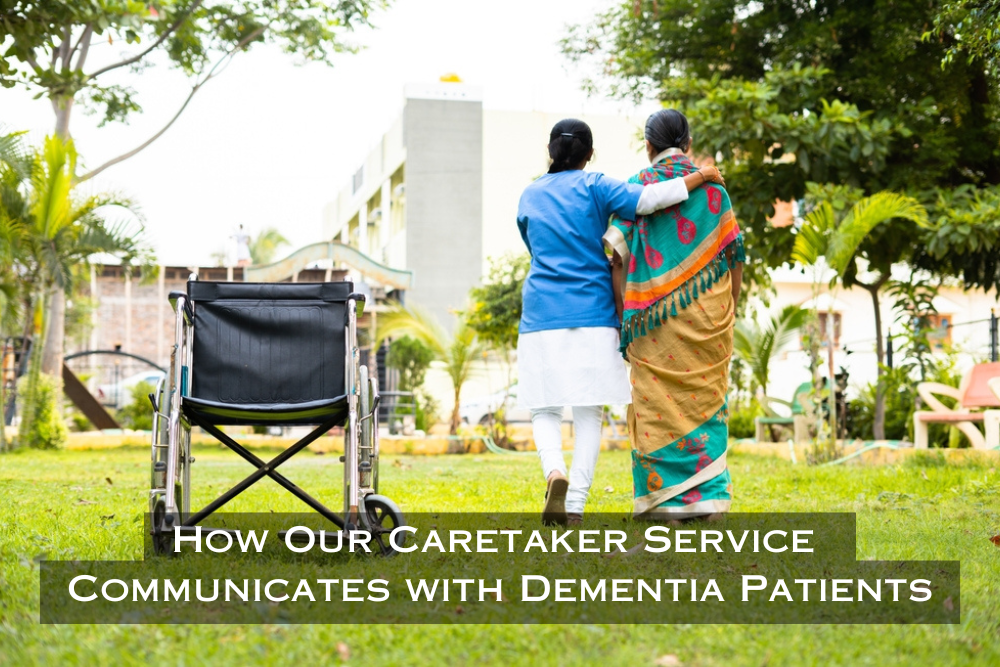
Communicating with a loved one who has dementia is never easy. Confusion, memory loss, and emotional changes can make conversations feel difficult and emotionally painful for families. Many children and caregivers wish they could reconnect with their parents the same way they once did — but dementia requires a completely different level of patience and understanding.
At Lok Seva Home Health Care, our trained caretaker services specialize in dementia care, where empathy, calm communication, and emotional reassurance are at the center of daily support. This article explains how professional caretakers communicate with dementia patients in ways that help them feel safe, respected, and emotionally supported every day.
Understanding Dementia and Communication Challenges
Dementia affects the brain’s ability to process language, emotions, and memory. This can lead to:
- Difficulty understanding conversations
- Repeating the same words or questions
- Forgetting familiar people or surroundings
- Mood swings or sudden anger
- Fear, anxiety, or withdrawal from conversations
These behaviors are not intentional. Dementia changes how the brain works, which is why seniors often need calm reassurance instead of correction or arguments.
How Our Caretaker Services Communicate with Dementia Patients
1. Speaking Calmly and Clearly
Our caretakers use a slow, gentle tone and simple words to avoid confusion. Speaking softly helps dementia patients stay calm and reduces frustration.
2. Using Eye Contact and Warm Expressions
Non-verbal communication matters greatly. Caretakers maintain eye contact, smile warmly, and use reassuring gestures to build trust and comfort.
3. Listening with Patience
Dementia patients may take extra time to express themselves. Our caretakers never rush, interrupt, or react harshly. Instead, they patiently listen and encourage communication.
4. Following Familiar Routines
Consistency helps reduce anxiety. Caretakers maintain regular schedules for meals, medicines, sleep, and activities so seniors feel secure and emotionally stable.
5. Connecting Through Memories
Talking about old memories, favorite songs, family stories, or childhood experiences often helps dementia patients feel emotionally connected and comfortable.
6. Handling Emotional Outbursts Gently
If a patient becomes angry, restless, or emotional, caretakers avoid confrontation. They calmly redirect attention toward something soothing or familiar.
7. Providing Companionship and Reassurance
Sometimes emotional presence matters more than conversation. Sitting beside the patient, holding their hand, or simply staying nearby can provide immense comfort.
Benefits for Families
With professional dementia care, families gain more than just daily assistance — they gain peace of mind knowing their parent is emotionally supported and safe.
- Reduced stress and caregiver burnout
- A calmer home environment
- Better emotional support for the senior
- Regular updates about health and behavior changes
- More quality family time without constant caregiving pressure
Why Choose Lok Seva Home Health Care
At Lok Seva Home Health Care, we provide trained caretakers experienced in supporting seniors with dementia, Alzheimer’s, Parkinson’s, and other neurological conditions.
Our services include:
- Specialized dementia communication support
- 24/7 home caregiving assistance
- Daily living and hygiene support
- Structured routines for emotional stability
- Transparent updates for family members
We understand that dementia affects the entire family, which is why our caretakers work with compassion, patience, and emotional understanding every single day.
FAQs
Q1: Can caretakers communicate effectively with advanced dementia patients?
Yes. Even when verbal communication becomes difficult, caretakers use tone, touch, facial expressions, and emotional reassurance to provide comfort.
Q2: Do caretakers also help with medicines and hygiene?
Yes. Caretakers assist with bathing, feeding, hygiene, medication reminders, and daily routines.
Q3: Can I hire a full-time caretaker for dementia care?
Yes. We provide part-time, full-time, and 24/7 caretaker services depending on the patient’s needs.
Q4: How do caretakers manage aggression or mood swings?
They stay calm, avoid arguments, and gently redirect the patient toward soothing activities or familiar conversations.
Conclusion
Caring for a parent with dementia requires more than love — it requires patience, emotional understanding, and the right caregiving approach. A trained caretaker helps seniors feel safe, heard, and emotionally supported even during the most confusing moments.
At Lok Seva Home Health Care, our dementia caretakers are trained to communicate with kindness, empathy, and patience — helping families feel reassured that their loved ones are truly cared for.
Reach out today to learn more about our specialized dementia caretaker services for seniors across India.