As our parents and grandparents grow older, their health naturally becomes more delicate. Even small changes in blood pressure, sugar levels, breathing, or body temperature can quickly turn into serious medical problems if left unnoticed.
That’s why daily health monitoring for seniors is extremely important.
For many families, however, constantly checking medications, monitoring symptoms, and keeping track of vital signs can become physically and emotionally overwhelming—especially while balancing work, children, and other responsibilities.
This is where trained home nurses play a vital role.
In this article, you’ll learn how nurses help seniors through daily health checks at home, what vital signs they monitor, why regular observation matters, and how professional nursing care helps elderly patients stay safer, healthier, and more comfortable in their own homes.
Why Daily Health Checks Are Important for Elderly People
As people age, the body becomes weaker and less capable of recovering quickly from illness. Seniors are more likely to develop chronic health conditions that require continuous care and monitoring.
Common health risks among elderly people include:
- High or low blood pressure
- Diabetes and fluctuating blood sugar levels
- Heart disease and irregular heartbeat
- Breathing problems like COPD or asthma
- Weak immunity and recurring infections
- Post-surgery complications and slow recovery
Many serious health issues begin with small warning signs that families may overlook. A trained nurse knows how to identify these changes early and take timely action before the condition becomes critical.
What Vital Signs Do Home Nurses Monitor Daily?
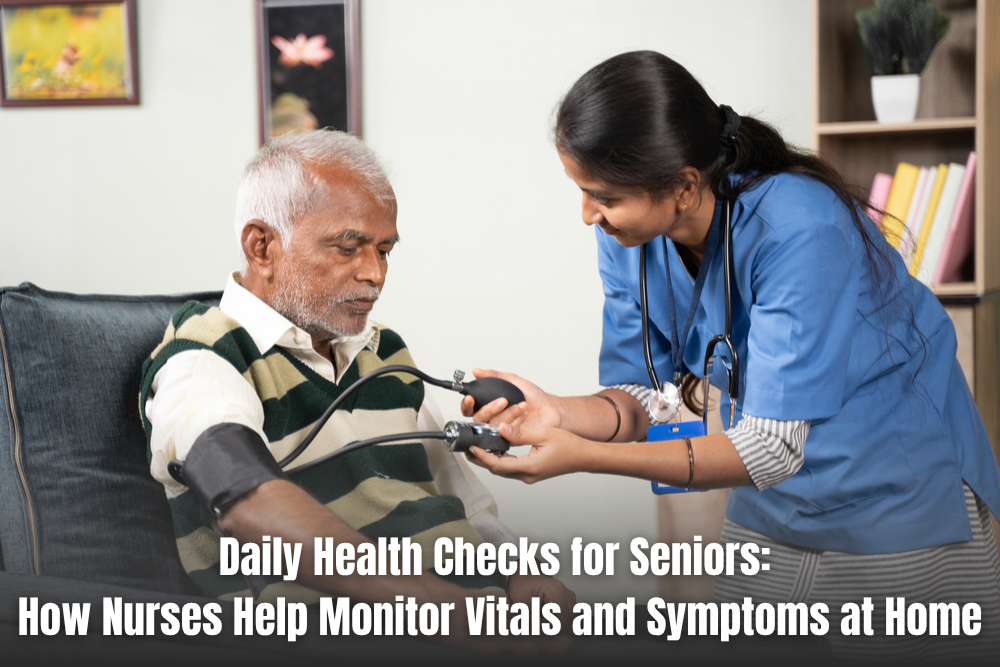
Home nurses regularly monitor important health indicators to track the senior’s condition and detect changes quickly.
1. Blood Pressure (BP)
Blood pressure fluctuations are very common in elderly patients.
Nurses monitor BP to detect:
- Hypertension (high BP)
- Low BP causing weakness, dizziness, or fainting
- Possible risk of stroke or heart complications
Regular monitoring helps maintain stable blood pressure and prevents emergencies.
2. Heart Rate (Pulse)
An irregular pulse or abnormal heart rate may indicate:
- Heart rhythm disorders
- Stress or anxiety
- Dehydration
- Infection or weakness
Daily pulse checks help nurses identify potential heart-related concerns early.
3. Blood Sugar Levels
For diabetic seniors, blood sugar monitoring is essential.
Home nurses help by:
- Checking glucose levels before or after meals
- Ensuring insulin or diabetes medicines are taken correctly
- Monitoring for signs of dangerously high or low sugar levels
Proper sugar management reduces the risk of weakness, unconsciousness, infections, and other complications.
4. Oxygen Level (SpO2)
Using a pulse oximeter, nurses regularly monitor oxygen saturation levels.
This is especially important for seniors suffering from:
- COPD
- Asthma
- Pneumonia
- Post-COVID breathing issues
Low oxygen levels can quickly become dangerous if not identified in time.
5. Body Temperature
Even a mild fever in seniors may indicate a developing infection.
Daily temperature monitoring helps detect:
- Urinary tract infections (UTIs)
- Respiratory infections
- Post-surgical infections
- Viral illnesses
Early detection allows faster treatment and prevents complications.
6. Weight and Appetite Monitoring
Sudden weight loss or poor appetite may signal hidden health issues.
Nurses monitor for:
- Malnutrition
- Digestive problems
- Medication side effects
- Depression or emotional distress
Proper nutrition is a key part of elderly health and recovery.
7. Observation of General Symptoms
Experienced nurses also observe subtle physical and behavioral changes such as:
- Fatigue and unusual weakness
- Swelling in legs or feet
- Confusion or dizziness
- Breathing difficulty
- Changes in urination or bowel habits
These observations often help detect problems before they become severe.
How Nurses Help Beyond Vital Sign Monitoring
Daily nursing care involves much more than simply recording numbers.
1. Medication Management
Many elderly patients take multiple medicines every day.
A home nurse ensures:
- Medicines are taken on time
- Correct dosages are followed
- Missed doses or medication mistakes are avoided
2. Health Reporting and Communication
Nurses maintain regular communication with family members and doctors.
They provide updates regarding:
- Vital readings
- Symptoms or health changes
- Appetite, sleep, or mobility concerns
3. Emotional Support and Companionship
Many seniors struggle with loneliness, anxiety, or fear related to aging and illness.
A caring nurse offers:
- Companionship and conversation
- Emotional reassurance
- Mental comfort and confidence
4. Early Emergency Detection
Professional nurses are trained to recognize emergency warning signs early.
Quick action during emergencies can prevent hospitalization or even save lives.
Benefits of Daily Health Monitoring for Seniors
- Early Detection of Health Problems before they worsen
- Better Management of Chronic Diseases
- Reduced Hospital Visits and Emergencies
- Improved Comfort and Safety at Home
- Peace of Mind for Family Members
- Better Overall Quality of Life for elderly patients
When Should You Hire a Home Nurse?
You should consider hiring a home nurse if your parent:
- Has diabetes, BP issues, COPD, or heart disease
- Recently returned home after hospitalization
- Needs injections, wound care, or medical supervision
- Lives alone or requires regular observation
- Has mobility, memory, or communication difficulties
Professional Elderly Nursing Care at Home
At Lok Seva Home Health Care, we provide trained and experienced home nurses for elderly patients across India.
Our nursing services include:
- Daily vital sign monitoring
- Medication management
- Diabetes and BP monitoring
- Post-hospital recovery support
- 24/7 home nursing care
- Compassionate elderly support and supervision
Our nurses provide not only medical care but also dignity, comfort, and emotional reassurance for seniors and their families.
FAQs About Daily Health Monitoring for Seniors
Q1. Can family members monitor vitals themselves at home?
Basic monitoring is possible, but trained nurses know how to identify dangerous patterns and subtle warning signs that families may miss.
Q2. How often should elderly vital signs be checked?
This depends on the senior’s health condition, but many elderly patients benefit from once or twice daily monitoring.
Q3. Are home nurses trained to handle emergencies?
Yes. Professional home nurses are trained to identify emergency symptoms and take immediate action when necessary.
Q4. Can nurses provide updates to family members remotely?
Yes. Many families receive regular updates through WhatsApp, phone calls, or daily reports from the nurse.
Q5. Is daily nursing care available for long-term elderly support?
Yes. Nursing care can be arranged for short-term recovery or long-term elderly care depending on the patient’s needs.
Conclusion
Daily health monitoring is one of the most important parts of elderly care. Small health changes can quickly become serious problems in seniors if left unnoticed.
From checking blood pressure and sugar levels to managing medicines and identifying warning signs early, trained home nurses help elderly parents stay safer, healthier, and more comfortable at home.
If your loved one needs compassionate nursing support at home, contact Lok Seva Home Health Care and give your family the peace of mind that comes with professional elderly care.