
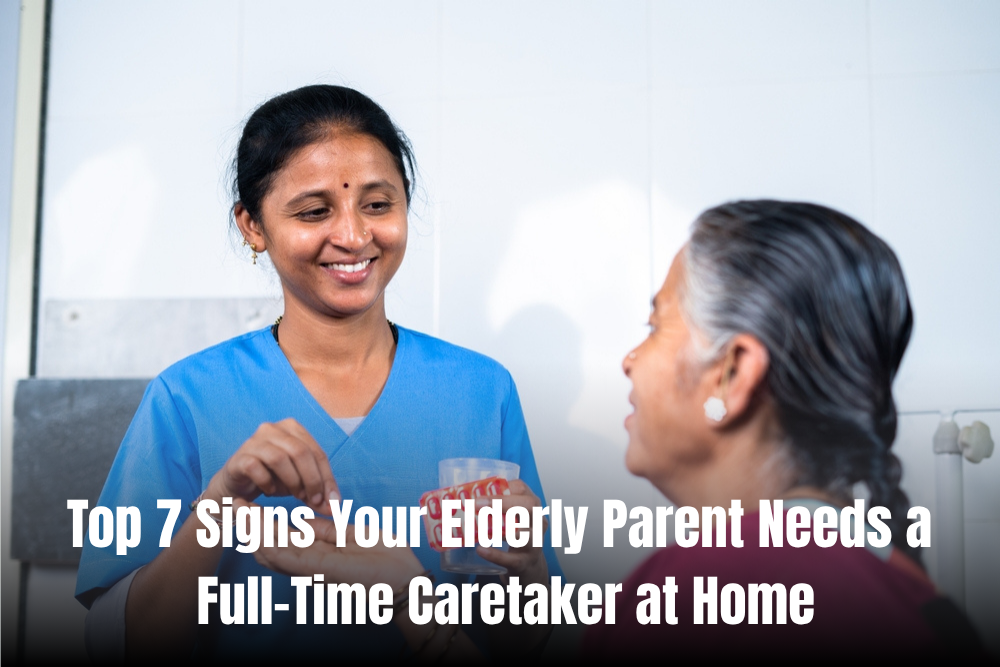
As parents grow older, their physical and emotional needs begin to change. Sometimes these changes happen gradually, while in other cases they appear suddenly after an illness, fall, or hospitalization. In the beginning, occasional help from family members may seem enough but there may come a point when your elderly parent requires full-time care and supervision to remain safe, healthy, and comfortable at home.
In this article, we’ll explain 7 important signs that indicate your loved one may benefit from the support of a full-time caretaker. Recognizing these signs early can help prevent accidents, reduce stress for families, and improve your parent’s overall quality of life.
1. Frequent Falls or Difficulty Moving Around
One of the biggest warning signs is repeated falls or trouble walking safely. If your parent struggles to get out of bed, loses balance often, or avoids moving around due to fear of falling, they may no longer be safe alone.
Mobility problems can happen because of:
- Arthritis or joint pain
- Weak muscles or poor balance
- Stroke recovery
- Parkinson’s disease or neurological issues
A full-time caretaker can assist with walking, bathroom visits, transfers from bed to chair, and help reduce the risk of dangerous falls or fractures.
2. Missed Medications or Confusion About Dosages
Many elderly parents take multiple medicines every day. Forgetting medicines, taking the wrong dosage, or mixing medications incorrectly can lead to serious health complications.
Signs to watch for include:
- Unopened medicine strips
- Missed refill schedules
- Confusion about medicine timings
- Taking duplicate doses accidentally
A trained caretaker ensures proper medication management, timely reminders, and monitoring for side effects.
3. Poor Hygiene and Unclean Living Conditions
If your parent has stopped bathing regularly, wearing clean clothes, washing utensils, or maintaining basic cleanliness, it may indicate physical weakness, depression, memory issues, or difficulty managing daily life.
Common signs include:
- Body odour or poor grooming
- Dirty laundry piling up
- Untidy or unsafe living spaces
- Difficulty using the bathroom independently
A full-time caretaker helps maintain hygiene, cleanliness, comfort, and dignity every day.
4. Memory Loss or Behavioral Changes
Forgetfulness is common with aging, but severe confusion, mood swings, wandering, or repetitive behavior may indicate dementia or Alzheimer’s disease.
You may notice:
- Forgetting familiar people or places
- Leaving gas stoves or doors open
- Confusion during conversations
- Aggression, anxiety, or unusual behavior
A full-time caregiver provides supervision, emotional support, structured routines, and companionship to reduce stress and confusion.
5. Difficulty Cooking or Eating Properly
Many elderly individuals begin skipping meals, forgetting to eat, or avoiding cooking altogether because it becomes physically tiring or mentally confusing.
Poor nutrition can lead to:
- Weakness and fatigue
- Weight loss
- Poor immunity
- Slow recovery from illness
A caretaker helps by preparing nutritious meals, assisting with feeding if necessary, and ensuring proper hydration throughout the day.
6. Chronic Health Conditions Requiring Daily Monitoring
Parents living with conditions like diabetes, heart disease, COPD, paralysis, or post-surgery recovery often require ongoing supervision and support.
Daily care may include:
- Checking blood pressure or sugar levels
- Helping with oxygen support or nebulizers
- Physiotherapy assistance
- Monitoring symptoms and recovery progress
A trained caretaker or home nurse ensures these medical and daily needs are managed consistently and safely.
7. Loneliness, Isolation, or Depression
Emotional health is just as important as physical health. Elderly parents who live alone or rarely interact with others may begin feeling lonely, withdrawn, anxious, or depressed.
Warning signs include:
- Lack of interest in hobbies or activities
- Avoiding social interaction
- Changes in sleep patterns
- Persistent sadness or silence
A full-time caregiver provides companionship, emotional reassurance, and regular interaction that helps seniors feel supported and cared for.
Why Full-Time Elderly Care Makes a Difference
Hiring a trained and compassionate caretaker is not only about medical assistance—it’s about improving your parent’s quality of life.
Full-time care provides:
- Safety and supervision at home
- Dignity in daily living
- Emotional comfort and companionship
- Professional support for health needs
- Peace of mind for family members
When Should You Consider Hiring a Full-Time Caretaker?
If your parent regularly shows two or more of the signs mentioned above, it may be time to arrange professional support.
Seeking help is not a sign of failure it’s a responsible and caring decision that helps your loved one stay safer, healthier, and more comfortable.
Professional Elderly Care at Home
At Lok Seva Home Health Care, we provide experienced caretakers, nurses, and elderly support staff across India.
Our caregivers assist with:
- Mobility and fall prevention
- Medication reminders and monitoring
- Bathing and hygiene support
- Meal preparation and feeding assistance
- Companionship and emotional care
We are committed to helping elderly parents live safely, comfortably, and respectfully in their own homes.
FAQs: Full-Time Elderly Care at Home
Q1. Can I hire a full-time caretaker even if my parent is not bedridden?
Yes. Many seniors who are mobile still need help with meals, medication management, supervision, or emotional support.
Q2. What is the difference between a caretaker and a nurse?
Caretakers help with daily living activities like hygiene, feeding, companionship, and mobility. Nurses provide medical care such as injections, wound dressing, or post-surgery monitoring.
Q3. Is full-time elderly care affordable in India?
Care costs vary based on the patient’s condition and support required. Lok Seva Home Health Care offers flexible and affordable elderly care plans for families.
Q4. Will my parent feel comfortable with a caretaker at home?
Professional caregivers are trained to build trust, communicate gently, and help seniors feel emotionally comfortable and respected.
Q5. Are full-time home care services available across India?
Yes, Lok Seva Home Health Care provides trained caregivers and elderly care services across multiple Indian cities.
Conclusion
As parents age, their care needs often become more complex. Recognizing the signs early can help prevent accidents, improve emotional well-being, and ensure your loved one receives the support they truly need.
A full-time caretaker offers much more than assistance they provide safety, companionship, dignity, and peace of mind for the entire family.
If you’re looking for trusted elderly home care services, visit Lok Seva Home Health Care and give your loved ones the compassionate care and support they deserve.